Drawing Pictures

You're watching a preview. 300,000+ students are watching the full lesson.
Jon Haws
BS, BSN,RN,CCRN Alumnus
Master
To Master a topic you must score > 80% on the lesson quiz.

Included In This Lesson

Study Tools For Drawing Pictures

Survival Guide for Nurses (Book)
NURSING.com students have a 99.25% NCLEX pass rate.

Outline

When I was in college the first time I randomly enrolled in an Anatomy and Physiology course.

At the time I was a Health Science major. My goal was to teach and coach or maybe work with the Red Cross.

This was back in 2003 . . . and I can honestly say that the thought of becoming a nurse had never crossed my mind . . . not even once!

I had never considered myself great at science. I signed up for the Anatomy course simply because I loved learning about the body and this seemed “fun”.

Obviously, I didn’t realize at the time that A&P is one of the most difficult undergraduate courses you will take in college.

I quickly learned that this was going to be a HARD class.

But something happened . . . . I LOVED the content and despite it being hard I actually enjoyed studying.

What I learned was that prior to this course no other subject had truly sparked my interest. With this motivation came a search for ways to learn the material.

Memorization was not going to work for me . . . I had tried that before.

And . . .

Memorization only works until . . . you forget!

I needed to find tricks that allowed me to learn the material for good and to burn it into my brain.

Here’s what I learned.


Drawing Pictures Improves Learning and Memory

The concept called picture superiority effect, as studied by Carnegie Mellon University, states that:

“concepts are much more likely to be remembered if they are presented as pictures rather than words”

So much of learning science and health care is reading, reading, reading . . . there is so much to learn in order to provide the best care for our patients.

As a student one of the best things you can do to learn those concepts is to translate the text you are reading into pictures . . .

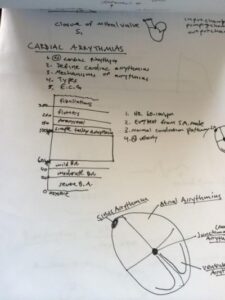
Here are some pictures from my personal notes that I took when I recently studied for the CCRN:
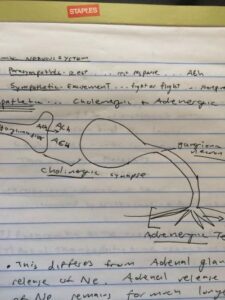
 

As you can see I use pictures EXTENSIVELY . . .

Not only do the pictures that you create help you to remember, but the actual process of creating the pictures FORCES you to learn the material well enough to create the picture in the first place.

There is an incredible study conducted by the American Federation of Teachers that states that:

“people who had high scores on spatial tests (visual learning/drawing pictures) . . . where much more likely to major in [science] disciplines . . . .”

Not only that, but they found that developing your ability to think spatially will improve your performance in science.

One last quote . . .

“Spatial training has been found to improve educational outcome . . . ”

Tips to Help you Draw Pictures to Learn

So it’s obvious that drawing can aid in learning, especially in a science based curriculum like nursing but how/what should you draw?

  1. Practice: ultimately you need to find what types of images work for you. Do you remember diagrams best, mind maps, illustrations of process, what works for you? Start today with multiple types of drawings and see what you remember best.
  2. Color: keep a pack of colored pencils, markers, or dry erase markers in your backpack. Use the color to give depth to your drawings and highlight key information.
  3. Mind maps: yes, there is a reason your teachers are trying to force you to make mind maps . . . they CAN work. I say “can” because they may not work for everyone, but they might work for you. Here are some places you can create mind maps.
    1. Pen and paper: simply draw your mind maps out on paper this is a fast way to create mind maps without constraints.
    2. Lucid Chart: I really like Lucid Chart for clean mind maps but it does take longer to create. You can start making charts for free but if you want to have multiple charts you will need an account for a couple bucks a month.
    3. PowerPoint: this is an easy way to make free charts and illustrations and you can save your presentation as a PDF or JPG.
  4. Think through the process: nursing is the perfect field of study to use charts. So much of what we do is process based and the body works via feedback loops in such a visual manner. Simply requiring yourself to think through these process as you draw will allow your imagination to flow.
  5. Don’t be a perfectionist: the point here is to help you learn. Don’t over think or overdo your drawings. Just draw exactly what works for you to help you learn the content. (as you can see my drawings are VERY crude, but they worked).


Just Get Started

So in the end I received at 98% in that Anatomy class of over 100 students and for the first time in my life I gained confidence that maybe I could learn complex material.

That ONE class changed the trajectory of my entire life. I learned how to study, I learned to love studying the body, and I began investigating health care as a career.

I know that whether or not you are a visual learner, drawing pictures will help with learning and retaining what you are studying and learning.

If mind maps don’t work for you no worries . . . actually sit down and draw the liver and label it with anatomical features and functions.


Conclusion

You can do this! The NCLEX® and nursing school are tough . . . they need to be to insure that we are prepared to provide the best patient care possible. But you can pass and have a brilliant future as a nurse!

Unlock the Complete Study System

Used by 300,000+ nursing students. 99.25% NCLEX pass rate.

200% NCLEX Pass Guarantee.
No Contract. Cancel Anytime.

🎉 Special Offer 🎉

Nursing School Doesn't Have To Be So Hard

Go from discouraged and stressed to motivated and passionate

BASICS & MORE

Concepts Covered:

  • Labor Complications
  • Microbiology
  • Respiratory Disorders
  • Infectious Disease Disorders
  • Acute & Chronic Renal Disorders
  • Anxiety Disorders
  • Cardiac Disorders
  • Pregnancy Risks
  • Basics of NCLEX
  • Renal Disorders
  • Emergency Care of the Cardiac Patient
  • Disorders of Pancreas
  • Noninfectious Respiratory Disorder
  • Sexually Transmitted Infections
  • Respiratory Emergencies
  • Studying
  • Central Nervous System Disorders – Brain
  • Musculoskeletal Disorders
  • Cardiovascular Disorders
  • Shock
  • Immunological Disorders
  • EENT Disorders
  • Perioperative Nursing Roles
  • Test Taking Strategies
  • Intraoperative Nursing
  • Medication Administration
  • Postoperative Nursing
  • Preoperative Nursing
  • Terminology
  • EENT Disorders
  • Emergency Care of the Trauma Patient
  • Adult
  • Understanding Society
  • Communication
  • Substance Abuse Disorders
  • Lower GI Disorders
  • Postpartum Complications
  • Oncologic Disorders
  • Neurologic and Cognitive Disorders
  • Basic
  • Reproductive System
  • Emotions and Motivation
  • Prenatal Concepts
  • Prioritization
  • Neurological
  • Psychological Emergencies
  • Concepts of Mental Health
  • Concepts of Pharmacology
  • Note Taking
  • Respiratory System
  • Infectious Respiratory Disorder
  • Labor and Delivery
  • Statistics
  • Personality Disorders
  • Pediatric
  • Neurological Emergencies
  • Learning Pharmacology
  • Concepts of Population Health
  • Circulatory System
  • Urinary Disorders
  • Cognitive Disorders
  • Newborn Complications
  • Documentation and Communication
  • Legal and Ethical Issues
  • Integumentary Disorders
  • Tissues and Glands
  • Community Health Overview
  • Vascular Disorders
  • Developmental Considerations
  • Developmental Theories
  • Depressive Disorders
  • Factors Influencing Community Health
  • Oncology Disorders
  • Musculoskeletal Trauma
  • Integumentary Disorders
  • Musculoskeletal Disorders

Study Plan Lessons

Adult Vital Signs (VS)
Nursing Care Plan (NCP) for Infection
Nursing Care Plan (NCP) for Impaired Gas Exchange
Vitals (VS) and Assessment
Nursing Care Plan (NCP) for Pertussis / Whooping Cough
Nursing Care Plan (NCP) for Chronic Kidney Disease
Nursing Care Plan (NCP) for Anxiety
ABGs Nursing Normal Lab Values
Adult Vital Signs (VS)
Congestive Heart Failure Concept Map
Congestive Heart Failure (CHF) Labs
Critical Thinking
Fluid Volume Overload
Heart (Cardiac) Failure Module Intro
Heart (Cardiac) Failure Therapeutic Management
Heart (Cardiac) Sound Locations and Auscultation
Heart (Heart) Failure Exacerbation
Heart Failure – Right Sided Nursing Mnemonic (HEAD)
Heart Failure (Acute Exacerbations, Chronic) for Progressive Care Certified Nurse (PCCN)
Heart Failure Case Study (45 min)
Heart Failure for Certified Emergency Nursing (CEN)
Heart Failure-Origin Nursing Mnemonic (Left – Lung|Right – Rest)
Heart Failure-Left-Sided Nursing Mnemonic (CHOP)
Isotonic Solutions (IV solutions)
Hypertonic Solutions (IV solutions)
Nursing Care and Pathophysiology for Heart Failure (CHF)
Nursing Care and Pathophysiology for Pulmonary Edema
Nursing Care and Pathophysiology for Cardiomyopathy
Nursing Care and Pathophysiology for Syphilis (STI)
Nursing Care and Pathophysiology of Chronic Kidney (Renal) Disease (CKD)
Nursing Care Plan (NCP) for Acute Respiratory Distress Syndrome
Nursing Care Plan (NCP) for Impaired Gas Exchange
Nursing Care Plan (NCP) for Respiratory Failure
Time Management
Pleural Effusion for Certified Emergency Nursing (CEN)
Nursing Care Plan (NCP) for Syncope (Fainting)
Nursing Care Plan (NCP) for Risk for Fall
Nursing Care Plan (NCP) for Decreased Cardiac Output
Nursing Care Plan (NCP) for Cardiogenic Shock
Nursing Care Plan (NCP) for Cardiomyopathy
Nursing Care Plan (NCP) for Chronic Kidney Disease
Nursing Care Plan (NCP) for Activity Intolerance
Nursing Care and Pathophysiology for Cardiogenic Shock
Nitroglycerin (Nitrostat) Nursing Considerations
Disease Specific Medications
Diuretics (Loop, Potassium Sparing, Thiazide, Furosemide/Lasix)
Defects of Decreased Pulmonary Blood Flow
Causes of Dyspnea Nursing Mnemonic (The 6 P’s)
Cataracts
Day in the Life of an Operating Room Nurse
Day in the Life of a Peds (Pediatric) Nurse
Formulating Nursing Diagnoses for Certified Perioperative Nurse (CNOR)
Intraoperative Nursing Priorities
Medication Reconciliation Review for Certified Perioperative Nurse (CNOR)
NRSNG Live | So You Want to be a Surgical Nurse?
Nursing Care Plan (NCP) for Acute Pain
Nursing Care Plan (NCP) for Respiratory Failure
Nutrition Assessments
Perioperative Nursing Roles
Perioperative Nursing Course Introduction
Postoperative (Postop) Complications
Post-Anesthesia Recovery
Preoperative (Preop) Nursing Priorities
Preoperative (Preop)Assessment
Preoperative (Preop) Education
Procedural Terminology
Sterile Field
Surgical Incisions & Drain Sites
Surgical Prep
Strabismus
Trauma Surgery – Medical History Nursing Mnemonic (AMPLE)
Ventilator Settings
Intraoperative (Intraop) Complications
Informed Consent
General Anesthesia
Crash Cart
CRNA
Advanced Cardiovascular Life Support (ACLS)
Dark Skin: IV Insertion
Flight Nurse
Finding Your First Nursing Job as a New Grad
Goal Setting
Head to Toe Nursing Assessment (Physical Exam)
ICU Nurse Report to Floor Nurses
ICU Nurse Report to OR (Operating)Team
Hypoxia – Signs and Symptoms (in Pediatrics) Nursing Mnemonic (FINES)
Hypovolemic Shock Case Study (OB sim) (60 min)
Intake and Output (I&O)
Introduction to Health Assessment
Interviewing for Nursing School
IV Drip Administration & Safety Checks
Isolation Precautions (MRSA, C. Difficile, Meningitis, Pertussis, Tuberculosis, Neutropenia)
Levels of Consciousness (LOC)
Lung Sounds
Life Support Review Course Introduction
Male Reproductive Anatomy (Anatomy and Physiology)
Maslow’s Hierarchy of Needs in Nursing
Menstrual Cycle
Moderate Sedation
Neuro Assessment
Neuro Terminology
Nursing Care and Pathophysiology for Asthma
Nursing Care Delivery Models
Nursing Care Plan (NCP) for Abdominal Pain
Nursing Care Plan (NCP) for Acute Respiratory Distress Syndrome
Nursing Care Plan (NCP) for Asthma
Nursing Care Plan (NCP) for Hypovolemic Shock
Nursing Care Plan (NCP) for Infection
Nursing Care Plan (NCP) for Infective Conjunctivitis / Pink Eye
Nursing Care Plan (NCP) for Influenza
Nursing Care Plan (NCP) for Migraines
Nursing Care Plan (NCP) for Risk for Fall
Nursing Care Plan (NCP) for Syncope (Fainting)
Nursing Care Plan (NCP) for Suicidal Behavior Disorder
Nursing Care Plan for Macular Degeneration
Nursing Case Study for Pediatric Asthma
OLD CARTS Mnemonic (OLD CARTS)
NURSING.com Assessment & Skills Checks
Phases of Nurse-Client Relationship
Pharmacology Course Introduction
R – Real-Life
Questions To Ask Before Applying To A Nursing Program
Respiratory Structure & Function
Surgical Incisions & Drain Sites
Surgical Counts for Certified Perioperative Nurse (CNOR)
Test Taking Course Introduction
Trauma Surgery – Medical History Nursing Mnemonic (AMPLE)
Tuberculosis (TB) Case Study (60 min)
Process of Labor – Mom Nursing Mnemonic (4 P’s)
Prealbumin (PAB) Lab Values
Pictures
Personality Disorders
Pediatric Advanced Life Support (PALS)
Patients with Communication Difficulties
Nursing Care Plan for (NCP) Autism Spectrum Disorder
Nursing Care Plan (NCP) for Nutrition Imbalance
Nursing Care Plan (NCP) for Glaucoma
Nursing Care Plan (NCP) for Decreased Cardiac Output
NRSNG Live | How to Pass Any Nursing School Test
NRSNG Live | My Super Secret Note Taking Method
NRSNG Live | The S.O.C.K Method for Mastering Nursing Pharmacology and Never Forgetting a Medication Again
NRSNG Live | The Successful State of Mind
NRSNG Live | What Your Nursing Professors Want to Tell You But Can’t
Insulin Drips
How to Write a Nursing Care Plan
High-Risk Behaviors
Heart Failure for Certified Emergency Nursing (CEN)
Heart Failure (Acute Exacerbations, Chronic) for Progressive Care Certified Nurse (PCCN)
Heart (Cardiac) Failure Therapeutic Management
Fundal Height Assessment for Nurses
Emergency Drugs Nursing Mnemonic (LEAN)
Drawing Blood from the IV
Drawing Pictures
Disease Specific Medications
Disasters & Bioterrorism
Day in the Life of a NICU Nurse
Day in the Life of an ICU (Intensive Care Unit) Nurse
Congestive Heart Failure (CHF) Labs
Communication of Patient Outcomes (Continuum of Care) for Certified Perioperative Nurse (CNOR)
Common Pathogens for UTI Nursing Mnemonic (KEEPS)
Cognitive Impairment Disorders
Cataracts
Cardiopulmonary Arrest
Cardiac Terminology
Cardiac Cycle
Cardiac Anatomy
Cardiac (Heart) Physiology
Body System Assessments
Blood Flow Through The Heart
Blood Pressure (BP) Control
Attention Deficit Hyperactivity Disorder (ADHD)
Advocating For Your Patient
Advanced Cardiovascular Life Support (ACLS)
3rd Degree AV Heart Block (Complete Heart Block)
2nd Degree AV Heart Block Type 2 (Mobitz II)
2nd Degree AV Heart Block Type 1 (Mobitz I, Wenckebach)
Documentation Basics
Trusting your Gut
Overview of the Nursing Process
Nursing Process – Diagnose
Steps in the Nursing Process 1 Nursing Mnemonic (ADPIE)
Nursing Care Plan (NCP) for Tuberculosis
Nursing Care Plan (NCP) for Impaired Gas Exchange
Nursing Care Plan (NCP) for Infection
Nursing Care Plan (NCP) for Glaucoma
Nursing Care Plan (NCP) for Risk for Fall
Nursing Care Plan (NCP) for Syncope (Fainting)
Goal Setting
Hygiene
How to Write A Nursing Progress Note
How to Write a Nursing Care Plan
Health Promotion Assessments
Intraoperative Nursing Priorities
Hypertension (HTN) Concept Map
Maslow’s Hierarchy of Needs in Nursing
MSN (Masters) vs. DNP (Doctorate)
Nurse-Patient Relationship
Nursing Process – Plan
Nursing Process – Evaluate
Our Goals for Teaching
Nursing School Application Essay
Pain and Nonpharmacological Comfort Measures
Perioperative Nursing Roles
Phases of Nurse-Client Relationship
Preoperative (Preop) Nursing Priorities
Preoperative (Preop)Assessment
Program Planning
Purpose of Nursing Care Plans
Self Concept
Identifying Interventions per Nursing Diagnoses for Certified Perioperative Nurse (CNOR)
Health Promotion & Disease Prevention
Health Promotion Model
Erikson’s Theory of Psychosocial Development
Continuity of Care
Community Health Education
Communicating with Other Nurses
Depression Concept Map
Disease Specific Medications
Advocating For Your Patient
Access to Care
Breast Cancer Concept Map
Intro to Community Health
Depression Concept Map
Congestive Heart Failure Concept Map
Concept Map Course Introduction
Head to Toe Nursing Assessment (Physical Exam)
Maslow’s Hierarchy of Needs in Nursing
Nursing Care Plan (NCP) & Interventions for Increased Intracranial Pressure (ICP)
Program Planning
Sepsis Concept Map
Stroke Concept Map
Hypertension (HTN) Concept Map
Drawing Pictures
Body System Assessments
Bowel Obstruction Concept Map
Blood Pressure (BP) Control
Asthma Concept Map
Aneurysm & Dissection
Amputation Concept Map
Acute Respiratory Distress Syndrome (ARDS) for Progressive Care Certified Nurse (PCCN)
Tuberculosis for Certified Emergency Nursing (CEN)
Tuberculosis (TB) Case Study (60 min)
TB Drugs Nursing Mnemonic (RIPE)
Respiratory Infections Module Intro
Nursing Care Plan (NCP) for Tuberculosis
Nursing Care Plan (NCP) for Impaired Gas Exchange
Nursing Care and Pathophysiology for Tuberculosis (TB)
Isolation Precautions (MRSA, C. Difficile, Meningitis, Pertussis, Tuberculosis, Neutropenia)
Isolation Precaution Types (PPE)
Communicable Diseases
Anti-Infective – Antitubercular
Airborne Precaution Diseases Nursing Mnemonic (MTV)
Casting & Splinting
Care of Vulnerable Populations
Complications of Immobility
Head to Toe Nursing Assessment (Physical Exam)
Mechanical Aids
Mobility & Assistive Devices
Musculoskeletal Terminology
Introduction to Health Assessment
Fractures
Preload and Afterload
Sympatholytics (Alpha & Beta Blockers)
Heart Failure Case Study (45 min)
Congestive Heart Failure Concept Map