Nursing Care and Pathophysiology for Heart Failure (CHF)

You're watching a preview. 300,000+ students are watching the full lesson.
Nichole Weaver
MSN/Ed,RN,CCRN
Master
To Master a topic you must score > 80% on the lesson quiz.
Take Quiz

Included In This Lesson

Study Tools For Nursing Care and Pathophysiology for Heart Failure (CHF)

Heart Failure-Origin (Mnemonic)
Heart Failure – Right Sided (Mnemonic)
Heart Failure-Left-Sided (Mnemonic)
Heart Failure Pathochart (Cheatsheet)
R v L Heart Failure (Cheatsheet)
Pitting Edema (Image)
Jugular Venous Distension (Image)
Heart Failure CHF Cardiac (Image)
NURSING.com students have a 99.25% NCLEX pass rate.

Outline


Pathophysiology: In heart failure, the heart does not pump effectively. This can occur because of many reasons but usually, because there has been damage to the heart tissue. The heart is not able to pump enough fluid forward so fluid then backs up. This fluid backup increases work on the heart as it tries to keep up and cannot.


Overview

The heart is a pump, circulates blood throughout the body. Heart failure = pump failure. Heart failure occurs when the heart cannot pump enough blood to supply the body’s needs.


Nursing Points

General

  1. Pump Failure
    1. Decreased perfusion forwards
    2. Increased congestion backwards
  2. Causes
    1. Myocardial Infarction
      1. Dead muscle can’t pump
    2. Hypertension
      1. ↑ afterload = ↑ stress on heart muscle
    3. Valve Disorders
      1. Blood not moving in right direction
      2. Inefficient pump
  3. Diagnostics
    1. BNP (Brain Natriuretic Peptide) – stretch of LV
    2. Echocardiogram
      1. Ejection Fraction
      2. Can diagnose valve disorder
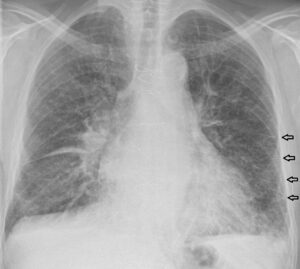
    3. Chest X-Ray (CXR
      1. Cardiomegaly
      2. Pulmonary Edema
  4. Complications
    1. Volume Overload
      1. Pulmonary Edema
      2. Exacerbations
    2. Decreased Perfusion
      1. Heart
        1. Angina, MI
        2. Arrhythmias
      2. Organs
        1. Impaired Kidney Function

Assessment

  1. Right-Sided Heart Failure
    1. Decreased Pulmonary Perfusion
      1. ↓ oxygenation
      2. ↓ activity tolerance
    2. Increased Systematic Congestion
      1. Peripheral Edema
      2. ↑ JVD
      3. ↑ Preload
      4. Weight Gain
      5. Fatigue
      6. Liver / GI Congestion
  2. Left Sided Heart Failure
    1. Decreased Systemic Perfusion
      1. Skin pale or dusky
      2. ↓ Peripheral pulses
      3. Slow  capillary refill
      4. ↓ renal perfusion
        1. ↓ urine output
        2. Kidney Injury / Failure
    2. Increased Pulmonary Congestion
      1. Pulmonary edema
        1. Cough
        2. Pink/frothy sputum
        3. Crackles
        4. Wheezes
        5. Tachypnea
        6. SOB on Exertion
      2. Anxiety/restlessness

Therapeutic Management

Goal is to decrease workload on heart while still increasing cardiac output. Discussed in more detail in Therapeutic Management Lesson

  1. Decrease Preload
  2. Decrease Afterload
  3. Increase Contractility

Patient Education

Discussed in more detail in Therapeutic Management Lesson

  1. Diet & Lifestyle Changes
  2. Medication Instructions
  3. Activity Restrictions
  4. Frequent Follow-Ups

Unlock the Complete Study System

Used by 300,000+ nursing students. 99.25% NCLEX pass rate.

200% NCLEX Pass Guarantee.
No Contract. Cancel Anytime.

ADPIE Related Lessons

Related Nursing Process (ADPIE) Lessons for Nursing Care and Pathophysiology for Heart Failure (CHF)

Transcript

This lesson is going to cover the basics of heart failure.

Heart disease is one of the leading causes of death in the US so you will see Heart Failure quite frequently in clinical practice. We want you to get an Ah-hah moment here and really understand this stuff. We’re gonna give you the most important things you need to know.

So, what exactly causes heart failure? Well remember it’s just pump failure – so anything that impacts the heart’s ability to pump efficiently can cause heart failure.

The top two causes are MI’s and hypertension, but valve disorders can cause a lot of problems, too. So what happens here? Well in an MI, if you remember from those lessons, blood supply is cut off to the heart muscle and the muscle itself dies. Muscle that is dead can’t contract, so the pumping ability or contractility of the heart is affected. Hypertension causes an increased afterload – remember from the hemodynamics lesson.

The heart has to pump harder against a higher pressure in the vessels. After a while, it can get worn out. Ultimately the ventricles can’t efficiently pump against that pressure any more. Someone with valve disorders, like stenosis or regurgitation, will have issues getting the blood where it’s supposed to be. If it’s not going where it’s supposed to, then it’s backing up – causing increased congestion or stretch or preload in the heart. This stress on the heart can lead to heart failure. So again, anything that impacts the heart’s ability to pump efficiently can cause heart failure – this means anything that affect the heart muscle.

BNP Heart Failure Guidelines

So there are multiple ways that we can diagnose and classify heart failure, but we just want you to know these three. The lab value we use is called Brain Natriuretic Peptide or BNP – this is released whenever the ventricles are stretched. So in Congestive Heart Failure patients when they’re severely volume overloaded, we can see this number jump into the thousands. In the labs course we will talk in much more detail about this value, so be sure to check that out.

Heart Failure Chest X-Ray

We’ll also do a chest x-ray, which could show a couple things. You may see the heart is actually enlarged because of the overload and stretch in the ventricles – and you may also see fluid in the lungs – that’s the pulmonary edema. We’ll also get an echocardiogram which can tell us things like end-diastolic volumes (remember that measures preload), ejection fraction, which is usually less than 50% in heart failure, and whether or not there are any valve issues.

Clinical Signs of Heart Failure

So let’s look at what this patient looks like when you actually see them in practice…

In the module intro we asked y’all to brainstorm what you thought this patient looked like. Guys if you get nothing else about Heart Failure, THIS is the part you’ve got to get.

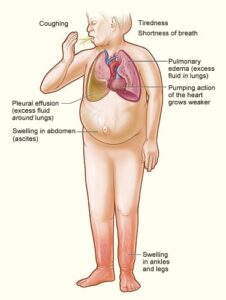
Remember we said that there’s decreased perfusion forward and increased congestion backwards, right? So in right-sided heart failure we’re going to see some oxygenation problems because of decreased perfusion to the lungs. They may struggle with activity because they just don’t have enough blood flow for their lungs!

Then backwards we see that congestion into the system – they are way overloaded in the systemic circulation – so what does that mean? That means peripheral edema – okay how would you feel if you swelled up like crazy? You’d be tired, you’d probably gain some weight? Some of that fluid may even collect in the gut and make you nauseous.

Then because the blood can’t get past the heart from the body, it even backs up into the neck and you’ll see this crazy jugular venous distention – it looks like a rope on their neck!! So if you’re seeing these signs of excessive volume out in the body – you gotta think right sided heart failure!

Okay, so what about the left? Well they actually have decreased perfusion to the body. Remember your signs of decreased perfusion? They’re gonna be pale, decreased pulses, maybe slow cap refill, and their skin might even be cold, right? Signs of decreased perfusion. Then, we see the congestion happening in their lungs – y’all their lungs are full of fluid! How would you feel? You’d be struggling to breathe, right? They’ll have a cough, and their sputum will be pink and frothy because there’s just so much blood pumping through the lungs! Imagine if this was you and had all this fluid in your lungs – what position would you want to be in? You lay down and you’ll feel like you’re drowning – a lot of these patients sleep with lots of pillows or even in a recliner. Some of them even lose weight because it becomes a choice to either eat or breathe! So if you see these severe respiratory issues and fluid on the lungs, you’ve got to think Left-sided heart failure!

So right sided the classic sign is the systemic overload and left-sided classic sign is pulmonary edema. If you get this you can pick out any issues they’ll have!

Complications of Heart Failure

Now, there are quite a few other complications of heart failure, but the one I really want y’all to understand is what happens when the kidneys don’t get perfused. So here’s our heart failure patient who has decreased perfusion forward and increased congestion backward. They’re volume overloaded, probably struggling to breathe, and now, they aren’t perfusing their kidneys.

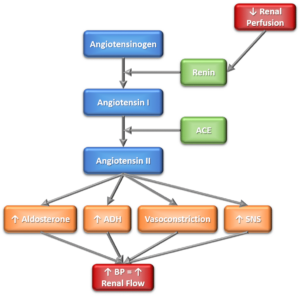
When the kidneys lose blood flow, it stimulates the Renin-Angiotensin-Aldosterone system (RAAS). You will learn more about this in pharmacology, but what you need to know is that it causes three main things to happen in the body.

  1. The first is water retention because of aldosterone and ADH. The kidneys see a lack of flow and think they need to hold onto water! So it is increasing the preload (or stretch) on ventricles whose preload is already sky-high!
  2. The second is vasoconstriction. This is the body trying to pull blood towards the heart to increase the blood pressure – this increases afterload (the force the heart has to pump against) – in a patient whose heart is already struggling as it is!
  3. And the third is the RAAS activates the Sympathetic Nervous System – it’s basically telling the heart to work harder and faster – which it cannot do! The end result is MORE volume overload, MORE stress on the heart muscle, and a perpetuated cycle that never ends.

That’s why I call it the cycle of death. What you’ll see when we look at therapeutic management in the next lesson is that the majority of therapy is aimed at breaking this cycle.

So let’s recap – anything that can affect the heart’s ability to pump effectively can cause heart failure, including an MI, hypertension, and valve disorders. Right-sided heart failure presents with symptoms of decreased pulmonary perfusion and increased systemic congestion – so they’re swollen, gain weight, lots of edema. Left-sided is the opposite – decreased systemic perfusion and increased pulmonary congestion, so these patients are really struggling to breathe. We diagnose with a BNP, Chest X-ray, and Echocardiogram. And don’t forget that the impact this has on the kidneys can make the problem worse – we’ll talk about how we work to break that cycle of death for these patients.

I hope we’ve been able to clear this up for you a bit, like we said sometimes heart failure is overcomplicated! Our goal is to make it easier to understand to give you that peace of mind and confidence! So go out and be your absolute best self today and, as always, happy nursing!

Study Faster with Full Video Transcripts

99.25% NCLEX Pass Rate vs 88.8% National Average

200% NCLEX Pass Guarantee.
No Contract. Cancel Anytime.

🎉 Special Offer 🎉

Nursing School Doesn't Have To Be So Hard

Go from discouraged and stressed to motivated and passionate

Medical surgical 1 (Cardiac and respiratory)

Concepts Covered:

  • Cardiac Disorders
  • Emergency Care of the Cardiac Patient
  • Cardiovascular
  • Shock
  • Shock
  • Noninfectious Respiratory Disorder
  • Respiratory
  • Acute & Chronic Renal Disorders
  • Hematologic Disorders
  • Respiratory Emergencies
  • Documentation and Communication
  • Preoperative Nursing
  • Immunological Disorders
  • Intraoperative Nursing
  • Vascular Disorders
  • Renal Disorders
  • Disorders of Pancreas
  • Newborn Complications
  • Medication Administration
  • Central Nervous System Disorders – Brain
  • Studying
  • Emergency Care of the Trauma Patient
  • Infectious Respiratory Disorder
  • Endocrine
  • Disorders of the Adrenal Gland
  • Disorders of the Thyroid & Parathyroid Glands
  • Musculoskeletal Trauma
  • Oncology Disorders
  • Integumentary Disorders
  • Integumentary Disorders
  • Liver & Gallbladder Disorders
  • Circulatory System
  • Disorders of Thermoregulation
  • Multisystem
  • Upper GI Disorders
  • Neurological Emergencies
  • Communication
  • Perioperative Nursing Roles
  • Sexually Transmitted Infections
  • Peripheral Nervous System Disorders
  • Disorders of the Posterior Pituitary Gland
  • Lower GI Disorders
  • Postoperative Nursing
  • Emergency Care of the Respiratory Patient
  • Emergency Care of the Neurological Patient
  • Respiratory Disorders
  • Respiratory System
  • Infectious Disease Disorders

Study Plan Lessons

02.06 Heart Murmurs for CCRN Review
02.08 Cardiac Catheterization & Acute Coronary Syndrome for CCRN Review
02.12 Myocardial Infarction- Inferior Wall for CCRN Review
02.13 Myocardial Infarction – Anterior Septal Wall for CCRN Review
02.14 Shock Stages for CCRN Review
02.15 Hypovolemic Shock for CCRN Review
02.16 Cardiogenic Shock for CCRN Review
02.17 Septic Shock for CCRN Review
02.18 Cardiovascular Practice Questions for CCRN Review
10.04 Pulmonary Question Review for CCRN Review
1st Degree AV Heart Block
2nd Degree AV Heart Block Type 1 (Mobitz I, Wenckebach)
2nd Degree AV Heart Block Type 2 (Mobitz II)
3rd Degree AV Heart Block (Complete Heart Block)
Acute Kidney Injury Case Study (60 min)
Acute Renal (Kidney) Module Intro
Acute Coronary Syndromes (MI-ST and Non ST, Unstable Angina) for Progressive Care Certified Nurse (PCCN)
ACE (angiotensin-converting enzyme) Inhibitors
Absolute Neutrophil Count (ANC) Lab Values
Absolute Reticulocyte Count (ARC) Lab Values
Acute Respiratory Distress Syndrome (ARDS) for Progressive Care Certified Nurse (PCCN)
Admissions, Discharges, and Transfers
Airway Suctioning
Anaphylaxis Nursing Interventions for Certified Perioperative Nurse (CNOR)
Anemia for Progressive Care Certified Nurse (PCCN)
Aneurysm (Dissecting, Repair) for Progressive Care Certified Nurse (PCCN)
Aneurysm and Dissection for Certified Emergency Nursing (CEN)
Angiotensin Receptor Blockers
Anion Gap
Anion Gap Acidosis 1 Nursing Mnemonic (KULT)
Aortic Aneurysm – Management Nursing Mnemonic (CRAM)
Aortic Aneurysm – Thoracic signs Nursing Mnemonic (PEE BADS)
Aortic Stenosis Symptoms Nursing Mnemonic (SAD)
Artificial Airways
ASA (Aspirin) Nursing Considerations
Aspiration for Certified Emergency Nursing (CEN)
Asthma (Severe) for Progressive Care Certified Nurse (PCCN)
Asthma for Certified Emergency Nursing (CEN)
Atenolol (Tenormin) Nursing Considerations
Atorvastatin (Lipitor) Nursing Considerations
Atrial Dysrhythmias for Progressive Care Certified Nurse (PCCN)
Atrial Fibrillation (A Fib)
Atrial Flutter
AV Blocks Dysrhythmias for Progressive Care Certified Nurse (PCCN)
AVPU Mnemonic (The AVPU Scale)
Bacterial Endocarditis – Symptoms Nursing Mnemonic (Be Joan Of Arc)
Bleeding Complications (Minor) Nursing Mnemonic (BEEP)
Bleeding for Certified Emergency Nursing (CEN)
Bleeding Precautions Nursing Mnemonic (RANDI)
Blood Flow Through The Heart
Blood Salvage Transfusion Anticipation for Certified Perioperative Nurse (CNOR)
Blunt Chest Trauma
Bronchoscopy
Calcium Channel Blockers
Cardiac Course Introduction
Cardiac Arrest Nursing Interventions for Certified Perioperative Nurse (CNOR)
Cardiac Labs – What and When to Use Them – Live Tutoring Archive
Cardiac Labs – What and When to Use Them 2 – Live Tutoring Archive
Cardiac Stress Test
Cardiac Surgery (Post-ICU Care) for Progressive Care Certified Nurse (PCCN)
Cardiac Tamponade for Progressive Care Certified Nurse (PCCN)
Cardiac Valves Blood Flow Nursing Mnemonic (Toilet Paper my Ass)
Cardiac/Vascular Catheterization (Diagnostic, Interventional) for Progressive Care Certified Nurse (PCCN)
Cardiogenic Shock and Obstructive Shock for Certified Emergency Nursing (CEN)
Cardiogenic Shock For PCCN for Progressive Care Certified Nurse (PCCN)
Cardiomyopathies (Dilated, Hypertrophic, Restrictive) for Progressive Care Certified Nurse (PCCN)
Cardiovascular Angiography
Cardiovascular Disorders (CVD) Module Intro
Causes of Anaphylaxis Nursing Mnemonic (Many Boys Love Food)
Causes of Dyspnea Nursing Mnemonic (The 6 P’s)
Chest Tube Assessment Nursing Mnemonic (Two AA’s)
Chest Tube Management
02.02 Cardiomyopathy for CCRN Review
02.08 Cardiac Catheterization & Acute Coronary Syndrome for CCRN Review
02.14 Shock Stages for CCRN Review
02.16 Cardiogenic Shock for CCRN Review
02.17 Septic Shock for CCRN Review
03.03 Hypoglycemia for CCRN Review
06.05 Wide Complex Tachycardia for CCRN Review
ACE (angiotensin-converting enzyme) Inhibitors
Acute Inflammatory Disease (Myocarditis, Endocarditis, Pericarditis) for Progressive Care Certified Nurse (PCCN)
Acute Kidney Injury Case Study (60 min)
Acute Respiratory Distress Syndrome (ARDS) for Progressive Care Certified Nurse (PCCN)
Adrenal and Thyroid Disorder Emergencies for Certified Emergency Nursing (CEN)
Allergic Reactions and Anaphylaxis for Certified Emergency Nursing (CEN)
Amputation for Certified Emergency Nursing (CEN)
Anemia for Progressive Care Certified Nurse (PCCN)
Aneurysm and Dissection for Certified Emergency Nursing (CEN)
Angiotensin Receptor Blockers
Anti Tumor Antibiotics
Antineoplastics
Aspiration for Certified Emergency Nursing (CEN)
Atrial Dysrhythmias for Progressive Care Certified Nurse (PCCN)
Atrial Fibrillation (A Fib)
Atrial Flutter
AV Blocks Dysrhythmias for Progressive Care Certified Nurse (PCCN)
AVPU Mnemonic (The AVPU Scale)
Blood Flow Through The Heart
Blood Salvage Transfusion Anticipation for Certified Perioperative Nurse (CNOR)
Brain Natriuretic Peptide (BNP) Lab Values
Burns for Certified Emergency Nursing (CEN)
Calcium Acetate (PhosLo) Nursing Considerations
Calcium Carbonate (Tums) Nursing Considerations
Calcium Channel Blockers
Cardiac (Heart) Enzymes
Cardiac A&P Module Intro
Cardiac Anatomy
Cardiac Arrest Nursing Interventions for Certified Perioperative Nurse (CNOR)
Cardiac Course Introduction
Cardiac Labs – What and When to Use Them – Live Tutoring Archive
Cardiac Labs – What and When to Use Them 2 – Live Tutoring Archive
Cardiac Stress Test
Cardiac Surgery (Post-ICU Care) for Progressive Care Certified Nurse (PCCN)
Cardiac Tamponade for Progressive Care Certified Nurse (PCCN)
Cardiac Valves Blood Flow Nursing Mnemonic (Toilet Paper my Ass)
Cardiac/Vascular Catheterization (Diagnostic, Interventional) for Progressive Care Certified Nurse (PCCN)
Cardiogenic Shock and Obstructive Shock for Certified Emergency Nursing (CEN)
Cardiogenic Shock For PCCN for Progressive Care Certified Nurse (PCCN)
Cardiomyopathies (Dilated, Hypertrophic, Restrictive) for Progressive Care Certified Nurse (PCCN)
Cerebral Metabolism
Chemotherapy Patients
Cirrhosis for Certified Emergency Nursing (CEN)
Cold Temperature-related Emergencies for Certified Emergency Nursing (CEN)
Compartment Syndrome for Certified Emergency Nursing (CEN)
Congestive Heart Failure Concept Map
Coronary Artery Disease Concept Map
Creatine Phosphokinase (CPK) Lab Values
Cushing’s Syndrome Case Study (60 min)
Day in the Life of a Med-surg Nurse
Disease Specific Medications
Dobutamine (Dobutrex) Nursing Considerations
Dopamine (Inotropin) Nursing Considerations
Dysrhythmias for Certified Emergency Nursing (CEN)
Dysrhythmias Labs
Echocardiogram (Cardiac Echo)
Endocarditis Case Study (45 min)
Endocarditis for Certified Emergency Nursing (CEN)
Envenomation Emergencies for Certified Emergency Nursing (CEN)
Epinephrine (EpiPen) Nursing Considerations
General Anesthesia
GERD (Gastroesophageal Reflux Disease)
Heart (Cardiac) and Great Vessels Assessment
Heart (Cardiac) Failure Module Intro
Heart (Cardiac) Failure Therapeutic Management
Heart (Cardiac) Sound Locations and Auscultation
Heart Failure (Acute Exacerbations, Chronic) for Progressive Care Certified Nurse (PCCN)
Heart Failure Case Study (45 min)
Heart Failure for Certified Emergency Nursing (CEN)
Heat Temperature-related Emergencies for Certified Emergency Nursing (CEN)
Hemorrhagic Fevers for Certified Emergency Nursing (CEN)
Hiatal Hernia
Hypertension (Uncontrolled) and Hypertensive Crisis for Progressive Care Certified Nurse (PCCN)
Hypertensive Crisis Case Study (45 min)
Hyperthyroidism Case Study (75 min)
Hypokalemia – Signs and Symptoms Nursing Mnemonic (6 L’s)
Hypoparathyroidism
Hypovolemic and Distributive Shock for Certified Emergency Nursing (CEN)
Influenza for Certified Emergency Nursing (CEN)
Intake and Output (I&O)
Interdisciplinary Team Participation for Certified Perioperative Nurse (CNOR)
Intraoperative Positioning
Lactate Dehydrogenase (LDH) Lab Values
Lung Cancer
Malignant Hyperthermia
MI Surgical Intervention
Minimally-Invasive Cardiac Surgery (Non-Sternal Approach) for Progressive Care Certified Nurse (PCCN)
Myocardial Infarction (MI) Case Study (45 min)
Neurogenic Shock for Certified Emergency Nursing (CEN)
Noncardiac Pulmonary Edema for Certified Emergency Nursing (CEN)
Norepinephrine (Levophed) Nursing Considerations
Nursing Care and Pathophysiology for Anaphylaxis
Nursing Care and Pathophysiology for Cardiogenic Shock
Nursing Care and Pathophysiology for Cushings Syndrome
Nursing Care and Pathophysiology for Gonorrhea (STI)
Nursing Care and Pathophysiology for Heart Failure (CHF)

Nursing Care and Pathophysiology for Hyperthyroidism
Nursing Care and Pathophysiology for Hypothyroidism
Nursing Care and Pathophysiology for Hypovolemic Shock
Nursing Care and Pathophysiology for Ischemic Stroke (CVA)
Nursing Care and Pathophysiology for Myasthenia Gravis
Nursing Care and Pathophysiology for Pneumothorax & Hemothorax
Nursing Care and Pathophysiology for Pulmonary Edema
Nursing Care and Pathophysiology for SIADH (Syndrome of Inappropriate antidiuretic Hormone Secretion)
Nursing Care and Pathophysiology for Valve Disorders
Nursing Care and Pathophysiology of Acute Kidney (Renal) Injury (AKI)
Nursing Care and Pathophysiology of Angina
Nursing Care and Pathophysiology of Chronic Kidney (Renal) Disease (CKD)
Nursing Care and Pathophysiology of Coronary Artery Disease (CAD)
Nursing Care and Pathophysiology of Endocarditis and Pericarditis
Nursing Care and Pathophysiology of Hypertension (HTN)
Nursing Care and Pathophysiology of Myocardial Infarction (MI)
Nursing Care and Pathophysiology of Myocarditis
Nursing Care Plan (NCP) for Activity Intolerance
Nursing Care Plan (NCP) for Acute Kidney Injury
Nursing Care Plan (NCP) for Acute Respiratory Distress Syndrome
Nursing Care Plan (NCP) for Anaphylaxis
Nursing Care Plan (NCP) for Anemia
Nursing Care Plan (NCP) for Angina
Nursing Care Plan (NCP) for Atrial Fibrillation (AFib)
Nursing Care Plan (NCP) for Blunt Chest Trauma
Nursing Care Plan (NCP) for Cardiogenic Shock
Nursing Care Plan (NCP) for Cardiomyopathy
Nursing Care Plan (NCP) for Chronic Kidney Disease
Nursing Care Plan (NCP) for Congestive Heart Failure (CHF)
Nursing Care Plan (NCP) for Cushing’s Disease
Nursing Care Plan (NCP) for Diabetic Ketoacidosis (DKA)
Nursing Care Plan (NCP) for Disseminated Intravascular Coagulation (DIC)
Nursing Care Plan (NCP) for Diverticulosis / Diverticulitis
Nursing Care Plan (NCP) for Endocarditis
Nursing Care Plan (NCP) for Gastroesophageal Reflux Disease (GERD)
Nursing Care Plan (NCP) for Glomerulonephritis
Nursing Care Plan (NCP) for Hashimoto’s Thyroiditis
Nursing Care Plan (NCP) for Heart Valve Disorders
Nursing Care Plan (NCP) for Hyperthyroidism
Nursing Care Plan (NCP) for Hypoparathyroidism
Nursing Care Plan (NCP) for Hypovolemic Shock
Nursing Care Plan (NCP) for Lyme Disease
Nursing Care Plan (NCP) for Myasthenia Gravis (MG)
Nursing Care Plan (NCP) for Myocardial Infarction (MI)
Nursing Care Plan (NCP) for Pancreatitis
Nursing Care Plan (NCP) for Pericarditis
Nursing Care Plan (NCP) for Pneumonia
Nursing Care Plan (NCP) for Pulmonary Embolism
Nursing Care Plan (NCP) for Sepsis
Nursing Care Plan (NCP) for Stroke (CVA)
Nursing Care Plan (NCP) for Syncope (Fainting)
Nursing Care Plan (NCP) for Thrombophlebitis / Deep Vein Thrombosis (DVT)
Nursing Care Plan for Coronary Artery Disease (CAD)
Nursing Care Plan for Distributive Shock
Nursing Care Plan for Myocarditis
Nursing Care Plan for Pulmonary Edema
Nursing Case Study for Acute Kidney Injury
Nursing Case Study for Cardiogenic Shock
Nursing Case Study for Hepatitis
Nursing Case Study for Rheumatic Heart Disease
Nursing Case Study for Type 1 Diabetes
Nutrition (Diet) in Disease
Obstructive Sleep Apnea for Progressive Care Certified Nurse (PCCN)
Pacemakers
Peptic Ulcer Disease Case Study (60 min)
Performing Cardiac (Heart) Monitoring
Pericardial Tamponade for Certified Emergency Nursing (CEN)
Phenobarbital (Luminal) Nursing Considerations
Pleural Effusion for Certified Emergency Nursing (CEN)
Post-Anesthesia Recovery
Premature Ventricular Contraction (PVC)
Product Evaluation and Selection for Certified Perioperative Nurse (CNOR)
Protein in Urine Lab Values
Pulmonary Embolus for Certified Emergency Nursing (CEN)
Renal Failure for Certified Emergency Nursing (CEN)
Renal Failure- Acute Kidney Injury (AKI), Chronic Kidney Disease (CKD) for Progressive Care Certified Nurse (PCCN)
Respiratory Trauma for Certified Emergency Nursing (CEN)
Seizure Disorders for Certified Emergency Nursing (CEN)
Sepsis Labs
Septic Shock (Sepsis) Case Study (45 min)
Shock States (Anaphylactic, Hypovolemic) For PCCN for Progressive Care Certified Nurse (PCCN)
Sinus Bradycardia
Sinus Tachycardia
Specialty Diets (Nutrition)
Stroke Case Study (45 min)
Stroke for Certified Emergency Nursing (CEN)
Stroke for Progressive Care Certified Nurse (PCCN)
Stroke Therapeutic Management (CVA)
Supraventricular Tachycardia (SVT)
Sympatholytics (Alpha & Beta Blockers)
Thrombolytics
Thyroxine (T4) Lab Values
Toxicity Sepsis- Signs and Symptoms Nursing Mnemonic (The 6 T’s)
Transient Ischemic Attack (TIA) for Certified Emergency Nursing (CEN)
Triiodothyronine (T3) Lab Values
Troponin I (cTNL) Lab Values
Valvular Heart Disease for Progressive Care Certified Nurse (PCCN)
Vasopressin
Ventilator Settings
Ventricular Dysrhythmias for Progressive Care Certified Nurse (PCCN)
Ventricular Fibrillation (V Fib)
Wound Bleeding (Uncontrolled External Hemorrhage) for Certified Emergency Nursing (CEN)
02.02 Cardiomyopathy for CCRN Review
Acute Respiratory Distress Syndrome (ARDS) for Progressive Care Certified Nurse (PCCN)
AIDS Case Study (45 min)
Airway Suctioning
Anemia for Progressive Care Certified Nurse (PCCN)
Anesthetic Agents
Anesthetic Agents
ARDS Case Study (60 min)
ARDS causes Nursing Mnemonic (GUT PASS)
Artificial Airways
Aspiration for Certified Emergency Nursing (CEN)
Assessment for Myasthenic Crisis Nursing Mnemonic (BRISH)
Asthma for Certified Emergency Nursing (CEN)
AVPU Mnemonic (The AVPU Scale)
Carbon Dioxide (Co2) Lab Values
Chest Tube Management
Chest Tube Management Case Study (60 min)
Chronic Obstructive Pulmonary Disease (COPD) Case Study (60 min)
Chronic Obstructive Pulmonary Disease (COPD) for Certified Emergency Nursing (CEN)
Coronavirus (COVID-19) Nursing Care and General Information
Day in the Life of a Med-surg Nurse
General Anesthesia
Heart Failure Case Study (45 min)
Heart Failure for Certified Emergency Nursing (CEN)
Infectious Diseases: Influenza for Progressive Care Certified Nurse (PCCN)
Nursing Care and Pathophysiology for Asthma
Nursing Care and Pathophysiology for Influenza (Flu)
Nursing Care and Pathophysiology of Acute Respiratory Distress Syndrome (ARDS)
Nursing Care and Pathophysiology of Pneumonia
Nursing Care Plan (NCP) for Acute Bronchitis
Nursing Care Plan (NCP) for Acute Respiratory Distress Syndrome
Nursing Case Study for Pneumonia
Respiratory A&P Module Intro
Respiratory Alkalosis
Respiratory Course Introduction
Respiratory Depression (Medication-Induced, Decreased-LOC-Induced) for Progressive Care Certified Nurse (PCCN)
Respiratory Distress Syndrome for Certified Emergency Nursing (CEN)
Respiratory Failure (Acute, Chronic, Failure to Wean) for Progressive Care Certified Nurse (PCCN)
Respiratory Infections (Pneumonia) for Progressive Care Certified Nurse (PCCN)
Respiratory Infections Module Intro
Respiratory Procedures Module Intro
Respiratory Trauma for Certified Emergency Nursing (CEN)
Respiratory Trauma Module Intro
Thoracentesis
Trach Suctioning
Tuberculosis for Certified Emergency Nursing (CEN)
Vaccine-Preventable Diseases (Measles, Mumps, Pertussis, Chicken Pox, Diphtheria) for Certified Emergency Nursing (CEN)