
Nursing Care and Pathophysiology of Acute Kidney (Renal) Injury (AKI)

You're watching a preview. 300,000+ students are watching the full lesson.
Master
To Master a topic you must score > 80% on the lesson quiz.
Take Quiz

Included In This Lesson

Study Tools For Nursing Care and Pathophysiology of Acute Kidney (Renal) Injury (AKI)

Intrarenal Causes of Acute Kidney Injury (Mnemonic)
Acute Kidney Injury Pathochart (Cheatsheet)
Abdominal Pain – Assessment (Cheatsheet)
Glomerulus (Image)
Kidney Damage (Image)
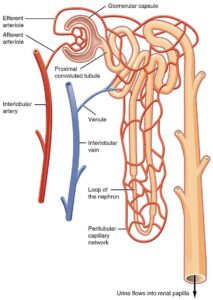
Anatomy of the Nephron (Image)
NURSING.com students have a 99.25% NCLEX pass rate.

Outline

Overview

  1. Sudden onset renal damage
  2. Loss of renal function due to poor circulation or renal cell damage
  3. Usually reversible may resolve on its own
  4. Can lead to permanent damage if not reversed quickly

Pathophysiology

Sudden decline in the function of the kidneys usually from decreased blood flow to the kidneys or injury to the kidney from inflammation and toxins. Acute kidney injury can be reversed if diagnosed and treated early but can progress to renal failure.

Nursing Points

General

  1. Causes
    1. Prerenal: decreased blood flow to kidneys, accounts for majority of cases
      1. Hypotension
      2. Hypovolemia
      3. ↓ Cardiac Output (i.e. Heart Failure, Shock)
    2. Intrarenal: damage within the kidney itself
      1. Tubular necrosis
      2. Infection
      3. Obstruction
      4. Contrast dye
      5. Nephrotoxic medications
    3. Postrenal: damage between the kidney and urethral meatus backs up, causing damage to kidneys
      1. Infection
      2. Calculi
      3. Obstruction
  2. Phases
    1. Onset
      1. Note a decrease in baseline urine output
    2. Oliguric
      1. Decreased urine output <400 mL/day
      2. Sickest phase
      3. ↑ BUN/Creatinine
      4. ↓ Glomerular Filtration Rate (GFR)
    3. Diuretic
      1. Beginning to recover
      2. Gradual urine output increase followed by diuresis
    4. Recovery
      1. Decreased edema
      2. Electrolytes normalize
      3. GFR increases

Assessment

  1. Signs and symptoms result from kidneys inability to regulate fluid and electrolytes
  2. Azotemia (retention of nitrogen wastes in blood)
    1. ↑ BUN/Creatinine
  3. ↓ Glomerular Filtration Rate (GFR)
  4. Decreased urine output in oliguric phase
    1. Should see increase in diuretic phase
  5. Signs of volume overload (HTN, peripheral edema, pulmonary edema)
  6. s/s infection if that was the source
  7. Metabolic acidosis
    1. Kidneys not holding HCO3
  8. Electrolyte abnormalities
    1. ↑ Potassium
    2. ↓ Sodium
    3. ↑ Phosphate
    4. ↓ Calcium

Therapeutic Management

  1. Oliguric Phase
    1. Restrict fluid intake
    2. Identify & treat cause
    3. Diuretics
  2. Diuretic Phase
    1. Replace fluids and electrolytes
      1. Especially watch K+ & Na+ levels
  3. If not recovering, may need dialysis

Nursing Concepts

  1. Fluid & Electrolyte Balance
    1. Daily weights
    2. Strict I&O
    3. Monitor electrolytes and replace as needed
    4. Fluid restriction in oliguric phase
  2. Elimination
    1. Monitor urine output
      1. Normal = >30mL/hr
      2. Look for progression from oliguric to diuretic phase
    2. Monitor for s/s UTI
    3. Prepare patient for dialysis

Patient Education

  1. Avoid foods high in sodium or potassium
    1. Caution – salt substitutes made with potassium chloride
  2. Educate on fluid restriction
  3. s/s to report to nurse or provider, especially chest pain

Unlock the Complete Study System

Used by 300,000+ nursing students. 99.25% NCLEX pass rate.

200% NCLEX Pass Guarantee.
No Contract. Cancel Anytime.

ADPIE Related Lessons

Related Nursing Process (ADPIE) Lessons for Nursing Care and Pathophysiology of Acute Kidney (Renal) Injury (AKI)

Transcript

In this lesson we’re going to talk about acute kidney injury. As you can guess, this is when we have a sudden onset of kidney damage and the kidneys get injured acutely.

Acute Kidney Injury is a sudden loss of renal function.

It’s generally caused by a perfusion issue or damage to the kidney tissue itself.

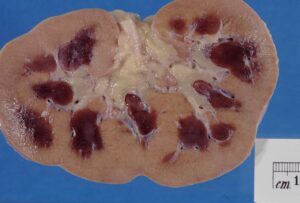
You can see the bleeding and swelling within this kidney that has been damaged. You can imagine how hard it would be for a kidney with this kind of damage to do its job, right? Now, it’s usually reversible or resolves on its own in a week or two.

It can also be prevented, so think about that when we look at the causes here in a second. If we aren’t able to reverse it or it doesn’t resolve quickly, it can lead to permanent damage and cause the patient to develop Chronic Kidney Disease, or CKD, which we’ll talk about in the next module.
Causes of Acute Kidney Injury (AKI)

There are three categories of causes of acute kidney injury and it all has to do with the source of the problem.

  • Prerenal
  • Intrarenal
  • Postrenal

Prerenal

So prerenal, pre means before, so the source of the problem is what comes before the kidneys – which means the blood flow into the kidneys. If blood isn’t flowing into the kidneys, not only do they not get perfused and can incur some ischemic damage, but they also can’t filter the blood if it’s not there, right? Some causes of prerenal kidney injury include hypotension, hypovolemia, or any decrease in cardiac output like heart failure or shock.

Intrarenal

Intrarenal means that the source of the problem is coming from within the kidneys themselves – so the blood flow is fine, but there’s been damage to the kidney tissues or cells that are making it not work correctly. Common causes of intrarenal kidney injury are infection, tubular necrosis, nephrotoxic drugs, or damage from contrast dye. That contrast dye is concentrated and sometimes hard to filter out of the kidneys. That’s why you’ll see us give patients extra fluids before they get a contrast scan to help protect the kidneys.

Postrenal

And finally postrenal, as you can guess, is caused by something happening after the kidneys. What usually happens is there’s some sort of infection or obstruction like a stone that causes backflow into the kidneys. The kidneys fill with that fluid because it can’t get out – that’s called hydronephrosis – and it causes damage and decreased kidney function.

So ultimately prerenal and postrenal sources will cause damage to the kidney itself, but we name this based on the original source of the problem. You can also see how a lot of this is preventable – we need to make sure we keep the patient’s blood pressure up, we need to keep them well hydrated, we need to protect their kidneys from damage with those drugs or contrast, and we need to treat infections and remove obstructions as quickly as possible.
Phases of Acute Kidney Injury

So, let’s talk phases – acute kidney injury goes through 4 phases. You really want to try to catch this as early as possible! In onset, what happens is we start seeing a decline in their baseline urine output. Well you know what we want as our minimum is about 30 mL/hr, right? That’s about 720 mL/day. What will happen is they’ll be cruising along at 1200 mL a day, about 50 mL/hr and you’ll notice it goes down to about 30 mL/hr. And you’ll think…no worries, it’s still above that minimum, right? But they actually just dropped their baseline urine output by almost 500 mL a day! Notice these things, guys! Trends are important. So, then as they continue to get worse, they’ll drop into what’s known as the Oliguric phase – this is the acute, sick phase of acute kidney injury, We’ll see their urine output drop to less than 400 mL/day (that’s like 16 mL/hr) and what urine they do produce will be concentrated and dark. Their BUN and Creatinine will start to go up because the kidneys aren’t doing their job, and we’ll see our GFR, or our glomerular filtration rate, drop – because the kidneys aren’t filtering the blood as fast as they should. During this phase, we’re going to see all the symptoms of kidney failure that we’ll talk about in just a second. As their kidneys begin to recover, they’ll move into the diuretic phase. We’ll see their urine output slowly increase and then suddenly they’ll start diuresing like crazy – basically now that their kidneys are working, they’re trying to get rid of all the fluid they’ve been holding onto. Then, when patients get into the recovery phase, we see our GFR normalize and slowly but surely everything brings itself back into alignment.

Symptoms of Oliguria

So, what symptoms are we going to see during that oliguric phase? Well all the symptoms are based on the fact that the kidneys are unable to perform their normal functions. We talked about those in detail in the module intro. So we see azotemia, which is a buildup of nitrogenous waste products, since they can’t filter them out – that’s when we see the BUN and Creatinine elevate.

We see their GFR drop – now I want to stop here because GFR isn’t given enough credit in nursing school – ask anyone what labs they check for the kidneys and they say BUN & creatinine! But – did you know that both BUN and Creatinine can be elevated for other reasons like dehydration or muscle damage? BUT – the GFR literally measures the amount of volume the glomerulus in our kidneys can filter in any given minute. It is highly specific to the kidneys and highly reflective of kidney function! Don’t discount it!

That being said – we already talked about seeing a decrease in urine output and how concentrated it would be. Since they aren’t able to get that fluid out, we actually start to see signs of volume overload in their system. We’ll see significant peripheral edema, and as it progresses, we begin to see pulmonary edema as well – so you’ll hear crackles and they’ll get short of breath.

Because the kidneys aren’t retaining that bicarb buffer like they should, we can see metabolic acidosis. That’s a pH less than 7.35 and a HCO3- less than 22. And we know that non-functioning kidneys can’t regulate electrolytes. We’ll look at this more closely in chronic kidney disease, but what we’ll see is an increased potassium, decreased sodium, increased phosphate, and decreased calcium. And then, of course, if infection was the source, we may see signs of infection.

So what do we do? Well during the oliguric phase, we try to restrict fluids a bit. The last thing we need to do is overload them even more than they already are. We want to work to identify and treat the cause and we’ll give diuretics to get that fluid off. Once they hit the diuretic phase, we want to make sure we balance their fluid status and replace any electrolytes as needed. We especially want to watch potassium and sodium because those can be life threatening if they’re outside of their normal range. If patients don’t seem to be getting better or aren’t responding to treatment, we may need to start them on hemodialysis. We’ll talk more about hemodialysis in the next module.

Nursing Care Plan for Acute Kidney Injury

Our priority nursing concepts for a patient with acute kidney injury are obviously fluid & electrolytes and elimination, but also perfusion because we want to make sure their kidneys are getting the blood flow that they need. Make sure you check out the care plan attached to this lesson for more detailed nursing interventions and rationales.

So let’s recap quickly. Acute kidney injury is sudden onset kidney damage that can be preventable and is usually reversible if caught early enough. We work to identify and treat the cause (whether it’s prerenal, intrarenal, or postrenal) as quickly as possible before permanent damage is done. We’ll see signs of volume overload and electrolyte abnormalities, as well as things like azotemia and metabolic acidosis that tell us the kidneys aren’t doing their job. We want to support those kidney functions by giving electrolytes or bicarb as needed, as well as diuretics, and we know that the patient may require dialysis if they aren’t recovering well.

So that’s it for Acute Kidney Injury, make sure you check out the resources attached to this lesson, as well as the rest of the lessons within this module to learn more. Now, go out and be your best self today. And, as always, Happy nursing!

Study Faster with Full Video Transcripts

99.25% NCLEX Pass Rate vs 88.8% National Average

200% NCLEX Pass Guarantee.
No Contract. Cancel Anytime.

🎉 Special Offer 🎉

Nursing School Doesn't Have To Be So Hard

Go from discouraged and stressed to motivated and passionate

Medical surgical 1 (Cardiac and respiratory)

Concepts Covered:

  • Cardiac Disorders
  • Emergency Care of the Cardiac Patient
  • Cardiovascular
  • Shock
  • Shock
  • Noninfectious Respiratory Disorder
  • Respiratory
  • Acute & Chronic Renal Disorders
  • Hematologic Disorders
  • Respiratory Emergencies
  • Documentation and Communication
  • Preoperative Nursing
  • Immunological Disorders
  • Intraoperative Nursing
  • Vascular Disorders
  • Renal Disorders
  • Disorders of Pancreas
  • Newborn Complications
  • Medication Administration
  • Central Nervous System Disorders – Brain
  • Studying
  • Emergency Care of the Trauma Patient
  • Infectious Respiratory Disorder
  • Endocrine
  • Disorders of the Adrenal Gland
  • Disorders of the Thyroid & Parathyroid Glands
  • Musculoskeletal Trauma
  • Oncology Disorders
  • Integumentary Disorders
  • Integumentary Disorders
  • Liver & Gallbladder Disorders
  • Circulatory System
  • Disorders of Thermoregulation
  • Multisystem
  • Upper GI Disorders
  • Neurological Emergencies
  • Communication
  • Perioperative Nursing Roles
  • Sexually Transmitted Infections
  • Peripheral Nervous System Disorders
  • Disorders of the Posterior Pituitary Gland
  • Lower GI Disorders
  • Postoperative Nursing
  • Emergency Care of the Respiratory Patient
  • Emergency Care of the Neurological Patient
  • Respiratory Disorders
  • Respiratory System
  • Infectious Disease Disorders

Study Plan Lessons

02.06 Heart Murmurs for CCRN Review
02.08 Cardiac Catheterization & Acute Coronary Syndrome for CCRN Review
02.12 Myocardial Infarction- Inferior Wall for CCRN Review
02.13 Myocardial Infarction – Anterior Septal Wall for CCRN Review
02.14 Shock Stages for CCRN Review
02.15 Hypovolemic Shock for CCRN Review
02.16 Cardiogenic Shock for CCRN Review
02.17 Septic Shock for CCRN Review
02.18 Cardiovascular Practice Questions for CCRN Review
10.04 Pulmonary Question Review for CCRN Review
1st Degree AV Heart Block
2nd Degree AV Heart Block Type 1 (Mobitz I, Wenckebach)
2nd Degree AV Heart Block Type 2 (Mobitz II)
3rd Degree AV Heart Block (Complete Heart Block)
Acute Kidney Injury Case Study (60 min)
Acute Renal (Kidney) Module Intro
Acute Coronary Syndromes (MI-ST and Non ST, Unstable Angina) for Progressive Care Certified Nurse (PCCN)
ACE (angiotensin-converting enzyme) Inhibitors
Absolute Neutrophil Count (ANC) Lab Values
Absolute Reticulocyte Count (ARC) Lab Values
Acute Respiratory Distress Syndrome (ARDS) for Progressive Care Certified Nurse (PCCN)
Admissions, Discharges, and Transfers
Airway Suctioning
Anaphylaxis Nursing Interventions for Certified Perioperative Nurse (CNOR)
Anemia for Progressive Care Certified Nurse (PCCN)
Aneurysm (Dissecting, Repair) for Progressive Care Certified Nurse (PCCN)
Aneurysm and Dissection for Certified Emergency Nursing (CEN)
Angiotensin Receptor Blockers
Anion Gap
Anion Gap Acidosis 1 Nursing Mnemonic (KULT)
Aortic Aneurysm – Management Nursing Mnemonic (CRAM)
Aortic Aneurysm – Thoracic signs Nursing Mnemonic (PEE BADS)
Aortic Stenosis Symptoms Nursing Mnemonic (SAD)
Artificial Airways
ASA (Aspirin) Nursing Considerations
Aspiration for Certified Emergency Nursing (CEN)
Asthma (Severe) for Progressive Care Certified Nurse (PCCN)
Asthma for Certified Emergency Nursing (CEN)
Atenolol (Tenormin) Nursing Considerations
Atorvastatin (Lipitor) Nursing Considerations
Atrial Dysrhythmias for Progressive Care Certified Nurse (PCCN)
Atrial Fibrillation (A Fib)
Atrial Flutter
AV Blocks Dysrhythmias for Progressive Care Certified Nurse (PCCN)
AVPU Mnemonic (The AVPU Scale)
Bacterial Endocarditis – Symptoms Nursing Mnemonic (Be Joan Of Arc)
Bleeding Complications (Minor) Nursing Mnemonic (BEEP)
Bleeding for Certified Emergency Nursing (CEN)
Bleeding Precautions Nursing Mnemonic (RANDI)
Blood Flow Through The Heart
Blood Salvage Transfusion Anticipation for Certified Perioperative Nurse (CNOR)
Blunt Chest Trauma
Bronchoscopy
Calcium Channel Blockers
Cardiac Course Introduction
Cardiac Arrest Nursing Interventions for Certified Perioperative Nurse (CNOR)
Cardiac Labs – What and When to Use Them – Live Tutoring Archive
Cardiac Labs – What and When to Use Them 2 – Live Tutoring Archive
Cardiac Stress Test
Cardiac Surgery (Post-ICU Care) for Progressive Care Certified Nurse (PCCN)
Cardiac Tamponade for Progressive Care Certified Nurse (PCCN)
Cardiac Valves Blood Flow Nursing Mnemonic (Toilet Paper my Ass)
Cardiac/Vascular Catheterization (Diagnostic, Interventional) for Progressive Care Certified Nurse (PCCN)
Cardiogenic Shock and Obstructive Shock for Certified Emergency Nursing (CEN)
Cardiogenic Shock For PCCN for Progressive Care Certified Nurse (PCCN)
Cardiomyopathies (Dilated, Hypertrophic, Restrictive) for Progressive Care Certified Nurse (PCCN)
Cardiovascular Angiography
Cardiovascular Disorders (CVD) Module Intro
Causes of Anaphylaxis Nursing Mnemonic (Many Boys Love Food)
Causes of Dyspnea Nursing Mnemonic (The 6 P’s)
Chest Tube Assessment Nursing Mnemonic (Two AA’s)
Chest Tube Management
02.02 Cardiomyopathy for CCRN Review
02.08 Cardiac Catheterization & Acute Coronary Syndrome for CCRN Review
02.14 Shock Stages for CCRN Review
02.16 Cardiogenic Shock for CCRN Review
02.17 Septic Shock for CCRN Review
03.03 Hypoglycemia for CCRN Review
06.05 Wide Complex Tachycardia for CCRN Review
ACE (angiotensin-converting enzyme) Inhibitors
Acute Inflammatory Disease (Myocarditis, Endocarditis, Pericarditis) for Progressive Care Certified Nurse (PCCN)
Acute Kidney Injury Case Study (60 min)
Acute Respiratory Distress Syndrome (ARDS) for Progressive Care Certified Nurse (PCCN)
Adrenal and Thyroid Disorder Emergencies for Certified Emergency Nursing (CEN)
Allergic Reactions and Anaphylaxis for Certified Emergency Nursing (CEN)
Amputation for Certified Emergency Nursing (CEN)
Anemia for Progressive Care Certified Nurse (PCCN)
Aneurysm and Dissection for Certified Emergency Nursing (CEN)
Angiotensin Receptor Blockers
Anti Tumor Antibiotics
Antineoplastics
Aspiration for Certified Emergency Nursing (CEN)
Atrial Dysrhythmias for Progressive Care Certified Nurse (PCCN)
Atrial Fibrillation (A Fib)
Atrial Flutter
AV Blocks Dysrhythmias for Progressive Care Certified Nurse (PCCN)
AVPU Mnemonic (The AVPU Scale)
Blood Flow Through The Heart
Blood Salvage Transfusion Anticipation for Certified Perioperative Nurse (CNOR)
Brain Natriuretic Peptide (BNP) Lab Values
Burns for Certified Emergency Nursing (CEN)
Calcium Acetate (PhosLo) Nursing Considerations
Calcium Carbonate (Tums) Nursing Considerations
Calcium Channel Blockers
Cardiac (Heart) Enzymes
Cardiac A&P Module Intro
Cardiac Anatomy
Cardiac Arrest Nursing Interventions for Certified Perioperative Nurse (CNOR)
Cardiac Course Introduction
Cardiac Labs – What and When to Use Them – Live Tutoring Archive
Cardiac Labs – What and When to Use Them 2 – Live Tutoring Archive
Cardiac Stress Test
Cardiac Surgery (Post-ICU Care) for Progressive Care Certified Nurse (PCCN)
Cardiac Tamponade for Progressive Care Certified Nurse (PCCN)
Cardiac Valves Blood Flow Nursing Mnemonic (Toilet Paper my Ass)
Cardiac/Vascular Catheterization (Diagnostic, Interventional) for Progressive Care Certified Nurse (PCCN)
Cardiogenic Shock and Obstructive Shock for Certified Emergency Nursing (CEN)
Cardiogenic Shock For PCCN for Progressive Care Certified Nurse (PCCN)
Cardiomyopathies (Dilated, Hypertrophic, Restrictive) for Progressive Care Certified Nurse (PCCN)
Cerebral Metabolism
Chemotherapy Patients
Cirrhosis for Certified Emergency Nursing (CEN)
Cold Temperature-related Emergencies for Certified Emergency Nursing (CEN)
Compartment Syndrome for Certified Emergency Nursing (CEN)
Congestive Heart Failure Concept Map
Coronary Artery Disease Concept Map
Creatine Phosphokinase (CPK) Lab Values
Cushing’s Syndrome Case Study (60 min)
Day in the Life of a Med-surg Nurse
Disease Specific Medications
Dobutamine (Dobutrex) Nursing Considerations
Dopamine (Inotropin) Nursing Considerations
Dysrhythmias for Certified Emergency Nursing (CEN)
Dysrhythmias Labs
Echocardiogram (Cardiac Echo)
Endocarditis Case Study (45 min)
Endocarditis for Certified Emergency Nursing (CEN)
Envenomation Emergencies for Certified Emergency Nursing (CEN)
Epinephrine (EpiPen) Nursing Considerations
General Anesthesia
GERD (Gastroesophageal Reflux Disease)
Heart (Cardiac) and Great Vessels Assessment
Heart (Cardiac) Failure Module Intro
Heart (Cardiac) Failure Therapeutic Management
Heart (Cardiac) Sound Locations and Auscultation
Heart Failure (Acute Exacerbations, Chronic) for Progressive Care Certified Nurse (PCCN)
Heart Failure Case Study (45 min)
Heart Failure for Certified Emergency Nursing (CEN)
Heat Temperature-related Emergencies for Certified Emergency Nursing (CEN)
Hemorrhagic Fevers for Certified Emergency Nursing (CEN)
Hiatal Hernia
Hypertension (Uncontrolled) and Hypertensive Crisis for Progressive Care Certified Nurse (PCCN)
Hypertensive Crisis Case Study (45 min)
Hyperthyroidism Case Study (75 min)
Hypokalemia – Signs and Symptoms Nursing Mnemonic (6 L’s)
Hypoparathyroidism
Hypovolemic and Distributive Shock for Certified Emergency Nursing (CEN)
Influenza for Certified Emergency Nursing (CEN)
Intake and Output (I&O)
Interdisciplinary Team Participation for Certified Perioperative Nurse (CNOR)
Intraoperative Positioning
Lactate Dehydrogenase (LDH) Lab Values
Lung Cancer
Malignant Hyperthermia
MI Surgical Intervention
Minimally-Invasive Cardiac Surgery (Non-Sternal Approach) for Progressive Care Certified Nurse (PCCN)
Myocardial Infarction (MI) Case Study (45 min)
Neurogenic Shock for Certified Emergency Nursing (CEN)
Noncardiac Pulmonary Edema for Certified Emergency Nursing (CEN)
Norepinephrine (Levophed) Nursing Considerations
Nursing Care and Pathophysiology for Anaphylaxis
Nursing Care and Pathophysiology for Cardiogenic Shock
Nursing Care and Pathophysiology for Cushings Syndrome
Nursing Care and Pathophysiology for Gonorrhea (STI)
Nursing Care and Pathophysiology for Heart Failure (CHF)
Nursing Care and Pathophysiology for Hyperthyroidism
Nursing Care and Pathophysiology for Hypothyroidism
Nursing Care and Pathophysiology for Hypovolemic Shock
Nursing Care and Pathophysiology for Ischemic Stroke (CVA)
Nursing Care and Pathophysiology for Myasthenia Gravis
Nursing Care and Pathophysiology for Pneumothorax & Hemothorax
Nursing Care and Pathophysiology for Pulmonary Edema
Nursing Care and Pathophysiology for SIADH (Syndrome of Inappropriate antidiuretic Hormone Secretion)
Nursing Care and Pathophysiology for Valve Disorders
Nursing Care and Pathophysiology of Acute Kidney (Renal) Injury (AKI)
Nursing Care and Pathophysiology of Angina
Nursing Care and Pathophysiology of Chronic Kidney (Renal) Disease (CKD)
Nursing Care and Pathophysiology of Coronary Artery Disease (CAD)
Nursing Care and Pathophysiology of Endocarditis and Pericarditis
Nursing Care and Pathophysiology of Hypertension (HTN)
Nursing Care and Pathophysiology of Myocardial Infarction (MI)
Nursing Care and Pathophysiology of Myocarditis
Nursing Care Plan (NCP) for Activity Intolerance
Nursing Care Plan (NCP) for Acute Kidney Injury
Nursing Care Plan (NCP) for Acute Respiratory Distress Syndrome
Nursing Care Plan (NCP) for Anaphylaxis
Nursing Care Plan (NCP) for Anemia
Nursing Care Plan (NCP) for Angina
Nursing Care Plan (NCP) for Atrial Fibrillation (AFib)
Nursing Care Plan (NCP) for Blunt Chest Trauma
Nursing Care Plan (NCP) for Cardiogenic Shock
Nursing Care Plan (NCP) for Cardiomyopathy
Nursing Care Plan (NCP) for Chronic Kidney Disease
Nursing Care Plan (NCP) for Congestive Heart Failure (CHF)
Nursing Care Plan (NCP) for Cushing’s Disease
Nursing Care Plan (NCP) for Diabetic Ketoacidosis (DKA)
Nursing Care Plan (NCP) for Disseminated Intravascular Coagulation (DIC)
Nursing Care Plan (NCP) for Diverticulosis / Diverticulitis
Nursing Care Plan (NCP) for Endocarditis
Nursing Care Plan (NCP) for Gastroesophageal Reflux Disease (GERD)
Nursing Care Plan (NCP) for Glomerulonephritis
Nursing Care Plan (NCP) for Hashimoto’s Thyroiditis
Nursing Care Plan (NCP) for Heart Valve Disorders
Nursing Care Plan (NCP) for Hyperthyroidism
Nursing Care Plan (NCP) for Hypoparathyroidism
Nursing Care Plan (NCP) for Hypovolemic Shock
Nursing Care Plan (NCP) for Lyme Disease
Nursing Care Plan (NCP) for Myasthenia Gravis (MG)
Nursing Care Plan (NCP) for Myocardial Infarction (MI)
Nursing Care Plan (NCP) for Pancreatitis
Nursing Care Plan (NCP) for Pericarditis
Nursing Care Plan (NCP) for Pneumonia
Nursing Care Plan (NCP) for Pulmonary Embolism
Nursing Care Plan (NCP) for Sepsis
Nursing Care Plan (NCP) for Stroke (CVA)
Nursing Care Plan (NCP) for Syncope (Fainting)
Nursing Care Plan (NCP) for Thrombophlebitis / Deep Vein Thrombosis (DVT)
Nursing Care Plan for Coronary Artery Disease (CAD)
Nursing Care Plan for Distributive Shock
Nursing Care Plan for Myocarditis
Nursing Care Plan for Pulmonary Edema
Nursing Case Study for Acute Kidney Injury
Nursing Case Study for Cardiogenic Shock
Nursing Case Study for Hepatitis
Nursing Case Study for Rheumatic Heart Disease
Nursing Case Study for Type 1 Diabetes
Nutrition (Diet) in Disease
Obstructive Sleep Apnea for Progressive Care Certified Nurse (PCCN)
Pacemakers
Peptic Ulcer Disease Case Study (60 min)
Performing Cardiac (Heart) Monitoring
Pericardial Tamponade for Certified Emergency Nursing (CEN)
Phenobarbital (Luminal) Nursing Considerations
Pleural Effusion for Certified Emergency Nursing (CEN)
Post-Anesthesia Recovery
Premature Ventricular Contraction (PVC)
Product Evaluation and Selection for Certified Perioperative Nurse (CNOR)
Protein in Urine Lab Values
Pulmonary Embolus for Certified Emergency Nursing (CEN)
Renal Failure for Certified Emergency Nursing (CEN)
Renal Failure- Acute Kidney Injury (AKI), Chronic Kidney Disease (CKD) for Progressive Care Certified Nurse (PCCN)
Respiratory Trauma for Certified Emergency Nursing (CEN)
Seizure Disorders for Certified Emergency Nursing (CEN)
Sepsis Labs
Septic Shock (Sepsis) Case Study (45 min)
Shock States (Anaphylactic, Hypovolemic) For PCCN for Progressive Care Certified Nurse (PCCN)
Sinus Bradycardia
Sinus Tachycardia
Specialty Diets (Nutrition)
Stroke Case Study (45 min)
Stroke for Certified Emergency Nursing (CEN)
Stroke for Progressive Care Certified Nurse (PCCN)
Stroke Therapeutic Management (CVA)
Supraventricular Tachycardia (SVT)
Sympatholytics (Alpha & Beta Blockers)
Thrombolytics
Thyroxine (T4) Lab Values
Toxicity Sepsis- Signs and Symptoms Nursing Mnemonic (The 6 T’s)
Transient Ischemic Attack (TIA) for Certified Emergency Nursing (CEN)
Triiodothyronine (T3) Lab Values
Troponin I (cTNL) Lab Values
Valvular Heart Disease for Progressive Care Certified Nurse (PCCN)
Vasopressin
Ventilator Settings
Ventricular Dysrhythmias for Progressive Care Certified Nurse (PCCN)
Ventricular Fibrillation (V Fib)
Wound Bleeding (Uncontrolled External Hemorrhage) for Certified Emergency Nursing (CEN)
02.02 Cardiomyopathy for CCRN Review
Acute Respiratory Distress Syndrome (ARDS) for Progressive Care Certified Nurse (PCCN)
AIDS Case Study (45 min)
Airway Suctioning
Anemia for Progressive Care Certified Nurse (PCCN)
Anesthetic Agents
Anesthetic Agents
ARDS Case Study (60 min)
ARDS causes Nursing Mnemonic (GUT PASS)
Artificial Airways
Aspiration for Certified Emergency Nursing (CEN)
Assessment for Myasthenic Crisis Nursing Mnemonic (BRISH)
Asthma for Certified Emergency Nursing (CEN)
AVPU Mnemonic (The AVPU Scale)
Carbon Dioxide (Co2) Lab Values
Chest Tube Management
Chest Tube Management Case Study (60 min)
Chronic Obstructive Pulmonary Disease (COPD) Case Study (60 min)
Chronic Obstructive Pulmonary Disease (COPD) for Certified Emergency Nursing (CEN)
Coronavirus (COVID-19) Nursing Care and General Information
Day in the Life of a Med-surg Nurse
General Anesthesia
Heart Failure Case Study (45 min)
Heart Failure for Certified Emergency Nursing (CEN)
Infectious Diseases: Influenza for Progressive Care Certified Nurse (PCCN)
Nursing Care and Pathophysiology for Asthma
Nursing Care and Pathophysiology for Influenza (Flu)
Nursing Care and Pathophysiology of Acute Respiratory Distress Syndrome (ARDS)
Nursing Care and Pathophysiology of Pneumonia
Nursing Care Plan (NCP) for Acute Bronchitis
Nursing Care Plan (NCP) for Acute Respiratory Distress Syndrome
Nursing Case Study for Pneumonia
Respiratory A&P Module Intro
Respiratory Alkalosis
Respiratory Course Introduction
Respiratory Depression (Medication-Induced, Decreased-LOC-Induced) for Progressive Care Certified Nurse (PCCN)
Respiratory Distress Syndrome for Certified Emergency Nursing (CEN)
Respiratory Failure (Acute, Chronic, Failure to Wean) for Progressive Care Certified Nurse (PCCN)
Respiratory Infections (Pneumonia) for Progressive Care Certified Nurse (PCCN)
Respiratory Infections Module Intro
Respiratory Procedures Module Intro
Respiratory Trauma for Certified Emergency Nursing (CEN)
Respiratory Trauma Module Intro
Thoracentesis
Trach Suctioning
Tuberculosis for Certified Emergency Nursing (CEN)
Vaccine-Preventable Diseases (Measles, Mumps, Pertussis, Chicken Pox, Diphtheria) for Certified Emergency Nursing (CEN)