Atrial Fibrillation (A Fib)

You're watching a preview. 300,000+ students are watching the full lesson.
Brad Bass
ASN,RN
Master
To Master a topic you must score > 80% on the lesson quiz.
Take Quiz

Included In This Lesson

Study Tools For Atrial Fibrillation (A Fib)

Atrial Fibrillation (Image)
10 Common EKG Heart Rhythms (Cheatsheet)
EKG Chart (Cheatsheet)
EKG Electrical Activity Worksheet (Cheatsheet)
Heart Rhythms Signs and Symptoms (Cheatsheet)
Heart Rhythm Identification (Cheatsheet)
Atrial Fibrillation Cheatsheet (Cheatsheet)
NURSING.com students have a 99.25% NCLEX pass rate.

Outline

Overview

  1. Atrial fibrillation
    1. Multiple disorganized cells produce  additional electrical impulse in atria
      1. Causes atria to quiver at a fast rate
        1. <300 bpm
        2. Unable to effectively contract
          1. Pooling of blood in atria
          2. High risk for stroke
      2. AV node blocks some of the  electrical impulses from reaching the ventricles
        1. Rapid irregular ventricular contractions
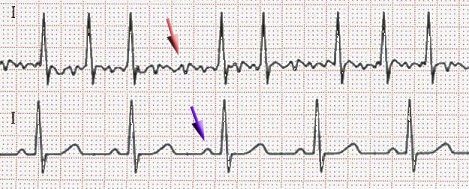
<span data-sheets-value="{"1":2,"2":"EKG of atrial fibrillation (top) and normal sinus rhythm (bottom). The purple arrow indicates a P wave, which is lost in atrial fibrillation."}" data-sheets-userformat="{"2":33555201,"3":{"1":0},"11":4,"12":0,"28":1}">EKG of atrial fibrillation (top) and normal sinus rhythm (bottom). The purple arrow indicates a P wave, which is lost in atrial fibrillation.</span>
By J. Heuser – Own work, CC BY-SA 3.0, https://commons.wikimedia.org/w/index.php?curid=465397

Nursing Points

General

  1. Characteristics of Atrial fibrillation  
    1. Rhythm
      1. Irregular
    2. Rate
      1. Atrial rate
        1. >300  bpm
        2. Wavy baseline
      2. Ventricular rate
        1. 60-100 bpm
        2. >100 bpm
          1. “Rapid Ventricular Response” (RVR)
    3. P:QRS ratio
      1. No obvious P waves
        1. Wavy baseline
      2. Not measurable
    4. PR interval
      1. Not measurable
    5. QRS complex
      1. 0.06-0.12 seconds

Assessment

  1. Patient Presentation
    1. Palpitations
    2. Fatigue
    3. Lightheaded/Syncope
  2. Acute or chronic
    1. If chronic
      1. Monitor rate/meds
    2. If  acute
      1. Convert to NSR
  3. Atrial and ventricular rates
    1. RVR
  4. Decreased Cardiac Output
    1. Syncope
    2. Hypotension
  5. PT/INR
    1. If taking Coumadin

Therapeutic Management

  1. Nursing Interventions
    1. Acute or chronic
    2. 12 Lead EKG
    3. Restore NSR
    4. Assess for s/s of stroke
  2. Convert to  NSR
  3. Control ventricular rate
    1. Medications
      1. Antiarrhythmics
      2. BB
      3. Calcium Channel Blockers
    2. Transesophageal Echocardiogram (TEE) or Cardioversion (CV)
    3. Ablations
  4. Decreased risk for stroke
    1. Anticoagulants
      1. Coumadin (Warfarin)
      2. Xarelto (Rivaroxaban)
      3. Eliquis (Apixaban)

Nursing Concepts

  1. EKG Rhythms
  2. Perfusion
  3. Clotting

Patient Education

  1. Do not miss a dose of on anticoagulants
    1. Check PT/INR as instructed
  2. Check radial pulse
    1. Report if >100

Related Lesson

Unlock the Complete Study System

Used by 300,000+ nursing students. 99.25% NCLEX pass rate.

200% NCLEX Pass Guarantee.
No Contract. Cancel Anytime.

Transcript

Hey guys, my name is Brad and welcome to nursing.com. And in today’s video, we are going to discuss atrial fibrillation, also known as AFib. I’d like to discuss some of the physiology behind what a-fib actually is, how this might present in a patient, some of the treatment modalities, and most importantly, for this lesson, how to recognize it on an EKG. Let’s dive in. 

So in atrial fibrillation, what is occurring is the atria quiver, those top two chambers of the heart, instead of contracting and ejecting blood down into those ventricles, they just kind of quiver. No real conduction occurs, no real contraction occurs. And as a result, blood just sits there, stagnated in those atrium. And the reason why is, we don’t have proper conduction from this SA node, a normal electrical conduction system originates at the SA node, going down to the AV node, through the bundle of His and terminating in those Purkinje fibers.  In a-fib we actually have an issue with that SA node. There’s a problem there. And let’s also remember that this electrical conduction system actually resides within the heart muscle itself. This SA node kind of being up here in the right atria. What actually occurs, because we have a dysfunctional SA node, our electrical impulse comes from this atrial tissue itself, and that is problematic. What this essentially occurs, or causes to occur, is a cyclical, electrical impulse to be sent cyclically, circularly all throughout this atrial tissue at a rate of 400 beats per minute. Now let’s recall also from our electrical A and P that this AV node actually acts as a filter. So let’s imagine it’s a filter and we don’t want to allow 400 atrial beats per minute to reach these ventricles because if that were to occur, then we’re basically looking at 400 beats per minute ventricularly. That’s not compatible with life. So this AV node acts as a filter, not allowing all 400 beats per minute to go through. It actually ends up reducing this ventricular rate for about 150 beats per minute. This is important. This is going to be clinically significant whenever we’re actually looking at a-fib. 

So what are some causes of atrial fibrillation? Well, this all really kind of comes down to poor perfusion of that heart tissue, right? In instances, such as hypertension, congestive heart failure, coronary artery disease. Essentially, you have to remember guys, this is so crucially important. You have to remember that, that electrical conduction system that we mentioned, it all actually lies right here within this heart muscle itself. So in cases, such as coronary artery disease, where there is a poor perfusion to this heart tissue itself, you have to remember, if there is no perfusion, then there is going to be no conduction. And if there’s no conduction, there’s going to be no contraction, right? You have to remember, not only is that heart muscle responsible for contracting, so if there is an impaired amount of blood being delivered to these heart tissues, you’re not only impairing the muscle itself, but you’re also impairing that electrical conduction system as well. Some assessment findings that we may see in patients who have a-fib are palpitations. Again, an atrial rate of 400 beats per minute, atria just quivering and not quite contracting, a hundred percent going to result in palpitations. You’re going to feel that fluttering in your chest, this fluttering in your chest causes anxiety. This atrial quiver, this impaired electrical conduction system is going to cause shortness of breath, right? Impaired perfusion, impaired electrical conduction system, impaired contraction. If your LV can’t contract effectively to get blood out of the heart, we’re going to end up seeing shortness of breath as a result. 

And it’s also important to remember your atrial kick. It’s something that they call an atrial kick, right? This is essentially the kick of blood that comes out of the atria down into the ventricles and the amount of blood that ends up getting ejected out of your ventricles, right? The amount of blood that ends up getting ejected out of these ventricles down here, 30% of that comes from your atria. That’s why, a-fib is so devastating. You’re literally losing 30% of your atrial kick. You’re losing 30% of the blood normally ejected out of the ventricles because instead of properly contracting, these atria are just quivering. 

Now some therapeutic management that is important to be mindful of, right? How are we going to treat a patient who is in  a-fib whose atria are contracting at 400 beats per minute, and we’re losing that atrial kick of blood, right? Cardioversion. This could be mechanical. This could also be chemical cardioversion being hooking a patient up to that defibrillator machine. And instead of using it to defibrillate them, we can use it to cardiovert them, basically providing a shock to the heart, less joules, less energy than we normally would in cardiac code defibrillating. But a way to try and knock that heart out of that abnormal rhythm. Cardioversion can also be a chemical, right?  Antiarrhythmic medications such as amiodarone, right. These are medications used to try and stabilize wild and erratic rhythms. Also medications such as negative chronotropes. Remember chronotropes  essentially are medications that affect heart rate and negative chronotropes are responsible for decreasing heart rate. Medications such as, metoprolol, for instance, right, ending in -olol. And then also anticoagulation. This is a big component of the big thing to know with, a-fib, okay. Important, incredibly important because these atria are not contracting. And instead they’re just quivering and blood is just sitting in here, stagnant, not emptying. We’re not getting rid of that atrial kick of 30% of blood, right? Instead it’s just stagnating and sitting there quivering. Stagnant blood clots, guys. So clots can form in these atria. And if these clots were to get ejected through the ventricles and out of the body, this is going to be problematic, right? Pulmonary embolisms strokes, myocardial infarction. 

Now using the six step method to solve for a-fib. This is how we’re going to be able to read a-fib on an EKG, right? Our heart rate, remember that atrially, we’re looking at 400 beats per minute and ventricularly, what we should see is approximately 150 beats per minute. 

Regularity. That R to R regularity. There will be no regularity at all. It’s going to be completely variable that R to R interval. And this is just due to the rapid nature at which those atria are contracting. 

P to QRS interval. The big, important thing that you need to know whenever you’re looking at an AFib on an EKG is that P waves are gone. You can not see P waves and why? Well, again, remember that cyclical nature at which those atrial tissues are firing these electrical impulses off at approximately 400 beats per minute. You’re not able to distinguish a P wave on an EKG due to such rapid firing. And because there’s no P wave identifiable, you can not measure a PR interval. 

And then regarding the QRS complex, you’re going to see a normal QRS complex length. Remember it’s 0.06 0.12 seconds. Let’s take a look at an example to bring further clarity. 

So if we wanted to take a look at the six step method that we normally would use to solve a-fib and we were taking a look at this one here in particular, as an example, let’s remember, let’s take a look at our heart right now. There’s no real identifiable way to measure an atrial heart rate. It’s just important to know in a-fib. And it’s approximately 400 beats per minute, but let’s take a look at our six seconds strip over here and actually measure our heart rate. Remember how many QRS complexes do we have? And then we multiply that by 10. So 1, 2, 3, 4, 5, 6, 7, 8, 9, 10, 11, 12 times 10 (12 X 10 = 120) giving us a heart rate of approximately 120 beats per minute. Like I said, we’ve been educating that we look at approximately 150 beats per minute. It’s not always exactly150, as we can see by this example. 

Now, the next thing that we want to do is take a look at our R to R interval. Again, we’re actually looking at the R wave and we’re measuring the distance between each individual R wave. And what you will notice is that there’s actually variability here, right? This is much longer in length than this shorter R to R interval again, in a-fib, no actual regularity in the R to R or P to QRS complex ratio. Again, P waves are gone. We cannot see these P waves complete loss of P waves, right? So you cannot measure the P to QRS complex ratio like that. Next thing would be our PR interval. Again, you cannot see a P wave. So we can’t measure a PR interval. That is the big distinguishing factor with a-fib. There’s no P wave and we have a rapid heart rate. 

Next thing is our QRS complex. We would actually measure our QRS complex looking at one small square 0.04, two small squares 0.08. So our QRS complex is 0.08 seconds (0.04 X 2 = 0.08), which again, we will remember is normal. And this is the way that we’re going to solve for a-fib. We have a loss of P waves. Our heart rate is approximately 150 beats per minute, no regularity at all with our R to R interval. We are certainly looking at a rhythm that is a-fib. 

So to summarize some of our key points with a-fib, it’s important to remember in atrial fibrillation, the atria are just quivering, right? Blood is sitting in there, stagnated.  Electrical impulse originating from atrial tissues, instead of the SA node, is just cyclical firing, and then uncoordinated in an uncontrolled manner at approximately 400 beats per minute. And then it eventually is filtered out by that AV node, leaving a ventricular rate of approximately 150 beats per minute. We’re going to recall that there is no regularity. This is a completely uncontrolled firing of impulses from that atrial tissue. It’s uncontrolled. So there’s no regularity at all. Then we’re also going to notice there is a loss of P wave, complete loss of P wave, a big clinical indicator whenever you’re reading EKG. So you’re not going to be able to see one P wave for every QRS, nor are you going to be able to measure a PR interval length. But whenever we take a look at the QRS complex recall, that is indeed going to be identified as normal.

Guys, I really hope that this helps you understand a-fib, not just looking at an EKG test, but also to be able to clinically understand what a patient is experiencing physiologically and how we may be able to treat that patient experiencing AFib. I hope that you guys go out there and be your best selves today. And as always, happy nursing.


Study Faster with Full Video Transcripts

99.25% NCLEX Pass Rate vs 88.8% National Average

200% NCLEX Pass Guarantee.
No Contract. Cancel Anytime.

🎉 Special Offer 🎉

Nursing School Doesn't Have To Be So Hard

Go from discouraged and stressed to motivated and passionate

Medical surgical 1 (Cardiac and respiratory)

Concepts Covered:

  • Cardiac Disorders
  • Emergency Care of the Cardiac Patient
  • Cardiovascular
  • Shock
  • Shock
  • Noninfectious Respiratory Disorder
  • Respiratory
  • Acute & Chronic Renal Disorders
  • Hematologic Disorders
  • Respiratory Emergencies
  • Documentation and Communication
  • Preoperative Nursing
  • Immunological Disorders
  • Intraoperative Nursing
  • Vascular Disorders
  • Renal Disorders
  • Disorders of Pancreas
  • Newborn Complications
  • Medication Administration
  • Central Nervous System Disorders – Brain
  • Studying
  • Emergency Care of the Trauma Patient
  • Infectious Respiratory Disorder
  • Endocrine
  • Disorders of the Adrenal Gland
  • Disorders of the Thyroid & Parathyroid Glands
  • Musculoskeletal Trauma
  • Oncology Disorders
  • Integumentary Disorders
  • Integumentary Disorders
  • Liver & Gallbladder Disorders
  • Circulatory System
  • Disorders of Thermoregulation
  • Multisystem
  • Upper GI Disorders
  • Neurological Emergencies
  • Communication
  • Perioperative Nursing Roles
  • Sexually Transmitted Infections
  • Peripheral Nervous System Disorders
  • Disorders of the Posterior Pituitary Gland
  • Lower GI Disorders
  • Postoperative Nursing
  • Emergency Care of the Respiratory Patient
  • Emergency Care of the Neurological Patient
  • Respiratory Disorders
  • Respiratory System
  • Infectious Disease Disorders

Study Plan Lessons

02.06 Heart Murmurs for CCRN Review
02.08 Cardiac Catheterization & Acute Coronary Syndrome for CCRN Review
02.12 Myocardial Infarction- Inferior Wall for CCRN Review
02.13 Myocardial Infarction – Anterior Septal Wall for CCRN Review
02.14 Shock Stages for CCRN Review
02.15 Hypovolemic Shock for CCRN Review
02.16 Cardiogenic Shock for CCRN Review
02.17 Septic Shock for CCRN Review
02.18 Cardiovascular Practice Questions for CCRN Review
10.04 Pulmonary Question Review for CCRN Review
1st Degree AV Heart Block
2nd Degree AV Heart Block Type 1 (Mobitz I, Wenckebach)
2nd Degree AV Heart Block Type 2 (Mobitz II)
3rd Degree AV Heart Block (Complete Heart Block)
Acute Kidney Injury Case Study (60 min)
Acute Renal (Kidney) Module Intro
Acute Coronary Syndromes (MI-ST and Non ST, Unstable Angina) for Progressive Care Certified Nurse (PCCN)
ACE (angiotensin-converting enzyme) Inhibitors
Absolute Neutrophil Count (ANC) Lab Values
Absolute Reticulocyte Count (ARC) Lab Values
Acute Respiratory Distress Syndrome (ARDS) for Progressive Care Certified Nurse (PCCN)
Admissions, Discharges, and Transfers
Airway Suctioning
Anaphylaxis Nursing Interventions for Certified Perioperative Nurse (CNOR)
Anemia for Progressive Care Certified Nurse (PCCN)
Aneurysm (Dissecting, Repair) for Progressive Care Certified Nurse (PCCN)
Aneurysm and Dissection for Certified Emergency Nursing (CEN)
Angiotensin Receptor Blockers
Anion Gap
Anion Gap Acidosis 1 Nursing Mnemonic (KULT)
Aortic Aneurysm – Management Nursing Mnemonic (CRAM)
Aortic Aneurysm – Thoracic signs Nursing Mnemonic (PEE BADS)
Aortic Stenosis Symptoms Nursing Mnemonic (SAD)
Artificial Airways
ASA (Aspirin) Nursing Considerations
Aspiration for Certified Emergency Nursing (CEN)
Asthma (Severe) for Progressive Care Certified Nurse (PCCN)
Asthma for Certified Emergency Nursing (CEN)
Atenolol (Tenormin) Nursing Considerations
Atorvastatin (Lipitor) Nursing Considerations
Atrial Dysrhythmias for Progressive Care Certified Nurse (PCCN)
Atrial Fibrillation (A Fib)

Atrial Flutter
AV Blocks Dysrhythmias for Progressive Care Certified Nurse (PCCN)
AVPU Mnemonic (The AVPU Scale)
Bacterial Endocarditis – Symptoms Nursing Mnemonic (Be Joan Of Arc)
Bleeding Complications (Minor) Nursing Mnemonic (BEEP)
Bleeding for Certified Emergency Nursing (CEN)
Bleeding Precautions Nursing Mnemonic (RANDI)
Blood Flow Through The Heart
Blood Salvage Transfusion Anticipation for Certified Perioperative Nurse (CNOR)
Blunt Chest Trauma
Bronchoscopy
Calcium Channel Blockers
Cardiac Course Introduction
Cardiac Arrest Nursing Interventions for Certified Perioperative Nurse (CNOR)
Cardiac Labs – What and When to Use Them – Live Tutoring Archive
Cardiac Labs – What and When to Use Them 2 – Live Tutoring Archive
Cardiac Stress Test
Cardiac Surgery (Post-ICU Care) for Progressive Care Certified Nurse (PCCN)
Cardiac Tamponade for Progressive Care Certified Nurse (PCCN)
Cardiac Valves Blood Flow Nursing Mnemonic (Toilet Paper my Ass)
Cardiac/Vascular Catheterization (Diagnostic, Interventional) for Progressive Care Certified Nurse (PCCN)
Cardiogenic Shock and Obstructive Shock for Certified Emergency Nursing (CEN)
Cardiogenic Shock For PCCN for Progressive Care Certified Nurse (PCCN)
Cardiomyopathies (Dilated, Hypertrophic, Restrictive) for Progressive Care Certified Nurse (PCCN)
Cardiovascular Angiography
Cardiovascular Disorders (CVD) Module Intro
Causes of Anaphylaxis Nursing Mnemonic (Many Boys Love Food)
Causes of Dyspnea Nursing Mnemonic (The 6 P’s)
Chest Tube Assessment Nursing Mnemonic (Two AA’s)
Chest Tube Management
02.02 Cardiomyopathy for CCRN Review
02.08 Cardiac Catheterization & Acute Coronary Syndrome for CCRN Review
02.14 Shock Stages for CCRN Review
02.16 Cardiogenic Shock for CCRN Review
02.17 Septic Shock for CCRN Review
03.03 Hypoglycemia for CCRN Review
06.05 Wide Complex Tachycardia for CCRN Review
ACE (angiotensin-converting enzyme) Inhibitors
Acute Inflammatory Disease (Myocarditis, Endocarditis, Pericarditis) for Progressive Care Certified Nurse (PCCN)
Acute Kidney Injury Case Study (60 min)
Acute Respiratory Distress Syndrome (ARDS) for Progressive Care Certified Nurse (PCCN)
Adrenal and Thyroid Disorder Emergencies for Certified Emergency Nursing (CEN)
Allergic Reactions and Anaphylaxis for Certified Emergency Nursing (CEN)
Amputation for Certified Emergency Nursing (CEN)
Anemia for Progressive Care Certified Nurse (PCCN)
Aneurysm and Dissection for Certified Emergency Nursing (CEN)
Angiotensin Receptor Blockers
Anti Tumor Antibiotics
Antineoplastics
Aspiration for Certified Emergency Nursing (CEN)
Atrial Dysrhythmias for Progressive Care Certified Nurse (PCCN)
Atrial Fibrillation (A Fib)
Atrial Flutter
AV Blocks Dysrhythmias for Progressive Care Certified Nurse (PCCN)
AVPU Mnemonic (The AVPU Scale)
Blood Flow Through The Heart
Blood Salvage Transfusion Anticipation for Certified Perioperative Nurse (CNOR)
Brain Natriuretic Peptide (BNP) Lab Values
Burns for Certified Emergency Nursing (CEN)
Calcium Acetate (PhosLo) Nursing Considerations
Calcium Carbonate (Tums) Nursing Considerations
Calcium Channel Blockers
Cardiac (Heart) Enzymes
Cardiac A&P Module Intro
Cardiac Anatomy
Cardiac Arrest Nursing Interventions for Certified Perioperative Nurse (CNOR)
Cardiac Course Introduction
Cardiac Labs – What and When to Use Them – Live Tutoring Archive
Cardiac Labs – What and When to Use Them 2 – Live Tutoring Archive
Cardiac Stress Test
Cardiac Surgery (Post-ICU Care) for Progressive Care Certified Nurse (PCCN)
Cardiac Tamponade for Progressive Care Certified Nurse (PCCN)
Cardiac Valves Blood Flow Nursing Mnemonic (Toilet Paper my Ass)
Cardiac/Vascular Catheterization (Diagnostic, Interventional) for Progressive Care Certified Nurse (PCCN)
Cardiogenic Shock and Obstructive Shock for Certified Emergency Nursing (CEN)
Cardiogenic Shock For PCCN for Progressive Care Certified Nurse (PCCN)
Cardiomyopathies (Dilated, Hypertrophic, Restrictive) for Progressive Care Certified Nurse (PCCN)
Cerebral Metabolism
Chemotherapy Patients
Cirrhosis for Certified Emergency Nursing (CEN)
Cold Temperature-related Emergencies for Certified Emergency Nursing (CEN)
Compartment Syndrome for Certified Emergency Nursing (CEN)
Congestive Heart Failure Concept Map
Coronary Artery Disease Concept Map
Creatine Phosphokinase (CPK) Lab Values
Cushing’s Syndrome Case Study (60 min)
Day in the Life of a Med-surg Nurse
Disease Specific Medications
Dobutamine (Dobutrex) Nursing Considerations
Dopamine (Inotropin) Nursing Considerations
Dysrhythmias for Certified Emergency Nursing (CEN)
Dysrhythmias Labs
Echocardiogram (Cardiac Echo)
Endocarditis Case Study (45 min)
Endocarditis for Certified Emergency Nursing (CEN)
Envenomation Emergencies for Certified Emergency Nursing (CEN)
Epinephrine (EpiPen) Nursing Considerations
General Anesthesia
GERD (Gastroesophageal Reflux Disease)
Heart (Cardiac) and Great Vessels Assessment
Heart (Cardiac) Failure Module Intro
Heart (Cardiac) Failure Therapeutic Management
Heart (Cardiac) Sound Locations and Auscultation
Heart Failure (Acute Exacerbations, Chronic) for Progressive Care Certified Nurse (PCCN)
Heart Failure Case Study (45 min)
Heart Failure for Certified Emergency Nursing (CEN)
Heat Temperature-related Emergencies for Certified Emergency Nursing (CEN)
Hemorrhagic Fevers for Certified Emergency Nursing (CEN)
Hiatal Hernia
Hypertension (Uncontrolled) and Hypertensive Crisis for Progressive Care Certified Nurse (PCCN)
Hypertensive Crisis Case Study (45 min)
Hyperthyroidism Case Study (75 min)
Hypokalemia – Signs and Symptoms Nursing Mnemonic (6 L’s)
Hypoparathyroidism
Hypovolemic and Distributive Shock for Certified Emergency Nursing (CEN)
Influenza for Certified Emergency Nursing (CEN)
Intake and Output (I&O)
Interdisciplinary Team Participation for Certified Perioperative Nurse (CNOR)
Intraoperative Positioning
Lactate Dehydrogenase (LDH) Lab Values
Lung Cancer
Malignant Hyperthermia
MI Surgical Intervention
Minimally-Invasive Cardiac Surgery (Non-Sternal Approach) for Progressive Care Certified Nurse (PCCN)
Myocardial Infarction (MI) Case Study (45 min)
Neurogenic Shock for Certified Emergency Nursing (CEN)
Noncardiac Pulmonary Edema for Certified Emergency Nursing (CEN)
Norepinephrine (Levophed) Nursing Considerations
Nursing Care and Pathophysiology for Anaphylaxis
Nursing Care and Pathophysiology for Cardiogenic Shock
Nursing Care and Pathophysiology for Cushings Syndrome
Nursing Care and Pathophysiology for Gonorrhea (STI)
Nursing Care and Pathophysiology for Heart Failure (CHF)
Nursing Care and Pathophysiology for Hyperthyroidism
Nursing Care and Pathophysiology for Hypothyroidism
Nursing Care and Pathophysiology for Hypovolemic Shock
Nursing Care and Pathophysiology for Ischemic Stroke (CVA)
Nursing Care and Pathophysiology for Myasthenia Gravis
Nursing Care and Pathophysiology for Pneumothorax & Hemothorax
Nursing Care and Pathophysiology for Pulmonary Edema
Nursing Care and Pathophysiology for SIADH (Syndrome of Inappropriate antidiuretic Hormone Secretion)
Nursing Care and Pathophysiology for Valve Disorders
Nursing Care and Pathophysiology of Acute Kidney (Renal) Injury (AKI)
Nursing Care and Pathophysiology of Angina
Nursing Care and Pathophysiology of Chronic Kidney (Renal) Disease (CKD)
Nursing Care and Pathophysiology of Coronary Artery Disease (CAD)
Nursing Care and Pathophysiology of Endocarditis and Pericarditis
Nursing Care and Pathophysiology of Hypertension (HTN)
Nursing Care and Pathophysiology of Myocardial Infarction (MI)
Nursing Care and Pathophysiology of Myocarditis
Nursing Care Plan (NCP) for Activity Intolerance
Nursing Care Plan (NCP) for Acute Kidney Injury
Nursing Care Plan (NCP) for Acute Respiratory Distress Syndrome
Nursing Care Plan (NCP) for Anaphylaxis
Nursing Care Plan (NCP) for Anemia
Nursing Care Plan (NCP) for Angina
Nursing Care Plan (NCP) for Atrial Fibrillation (AFib)
Nursing Care Plan (NCP) for Blunt Chest Trauma
Nursing Care Plan (NCP) for Cardiogenic Shock
Nursing Care Plan (NCP) for Cardiomyopathy
Nursing Care Plan (NCP) for Chronic Kidney Disease
Nursing Care Plan (NCP) for Congestive Heart Failure (CHF)
Nursing Care Plan (NCP) for Cushing’s Disease
Nursing Care Plan (NCP) for Diabetic Ketoacidosis (DKA)
Nursing Care Plan (NCP) for Disseminated Intravascular Coagulation (DIC)
Nursing Care Plan (NCP) for Diverticulosis / Diverticulitis
Nursing Care Plan (NCP) for Endocarditis
Nursing Care Plan (NCP) for Gastroesophageal Reflux Disease (GERD)
Nursing Care Plan (NCP) for Glomerulonephritis
Nursing Care Plan (NCP) for Hashimoto’s Thyroiditis
Nursing Care Plan (NCP) for Heart Valve Disorders
Nursing Care Plan (NCP) for Hyperthyroidism
Nursing Care Plan (NCP) for Hypoparathyroidism
Nursing Care Plan (NCP) for Hypovolemic Shock
Nursing Care Plan (NCP) for Lyme Disease
Nursing Care Plan (NCP) for Myasthenia Gravis (MG)
Nursing Care Plan (NCP) for Myocardial Infarction (MI)
Nursing Care Plan (NCP) for Pancreatitis
Nursing Care Plan (NCP) for Pericarditis
Nursing Care Plan (NCP) for Pneumonia
Nursing Care Plan (NCP) for Pulmonary Embolism
Nursing Care Plan (NCP) for Sepsis
Nursing Care Plan (NCP) for Stroke (CVA)
Nursing Care Plan (NCP) for Syncope (Fainting)
Nursing Care Plan (NCP) for Thrombophlebitis / Deep Vein Thrombosis (DVT)
Nursing Care Plan for Coronary Artery Disease (CAD)
Nursing Care Plan for Distributive Shock
Nursing Care Plan for Myocarditis
Nursing Care Plan for Pulmonary Edema
Nursing Case Study for Acute Kidney Injury
Nursing Case Study for Cardiogenic Shock
Nursing Case Study for Hepatitis
Nursing Case Study for Rheumatic Heart Disease
Nursing Case Study for Type 1 Diabetes
Nutrition (Diet) in Disease
Obstructive Sleep Apnea for Progressive Care Certified Nurse (PCCN)
Pacemakers
Peptic Ulcer Disease Case Study (60 min)
Performing Cardiac (Heart) Monitoring
Pericardial Tamponade for Certified Emergency Nursing (CEN)
Phenobarbital (Luminal) Nursing Considerations
Pleural Effusion for Certified Emergency Nursing (CEN)
Post-Anesthesia Recovery
Premature Ventricular Contraction (PVC)
Product Evaluation and Selection for Certified Perioperative Nurse (CNOR)
Protein in Urine Lab Values
Pulmonary Embolus for Certified Emergency Nursing (CEN)
Renal Failure for Certified Emergency Nursing (CEN)
Renal Failure- Acute Kidney Injury (AKI), Chronic Kidney Disease (CKD) for Progressive Care Certified Nurse (PCCN)
Respiratory Trauma for Certified Emergency Nursing (CEN)
Seizure Disorders for Certified Emergency Nursing (CEN)
Sepsis Labs
Septic Shock (Sepsis) Case Study (45 min)
Shock States (Anaphylactic, Hypovolemic) For PCCN for Progressive Care Certified Nurse (PCCN)
Sinus Bradycardia
Sinus Tachycardia
Specialty Diets (Nutrition)
Stroke Case Study (45 min)
Stroke for Certified Emergency Nursing (CEN)
Stroke for Progressive Care Certified Nurse (PCCN)
Stroke Therapeutic Management (CVA)
Supraventricular Tachycardia (SVT)
Sympatholytics (Alpha & Beta Blockers)
Thrombolytics
Thyroxine (T4) Lab Values
Toxicity Sepsis- Signs and Symptoms Nursing Mnemonic (The 6 T’s)
Transient Ischemic Attack (TIA) for Certified Emergency Nursing (CEN)
Triiodothyronine (T3) Lab Values
Troponin I (cTNL) Lab Values
Valvular Heart Disease for Progressive Care Certified Nurse (PCCN)
Vasopressin
Ventilator Settings
Ventricular Dysrhythmias for Progressive Care Certified Nurse (PCCN)
Ventricular Fibrillation (V Fib)
Wound Bleeding (Uncontrolled External Hemorrhage) for Certified Emergency Nursing (CEN)
02.02 Cardiomyopathy for CCRN Review
Acute Respiratory Distress Syndrome (ARDS) for Progressive Care Certified Nurse (PCCN)
AIDS Case Study (45 min)
Airway Suctioning
Anemia for Progressive Care Certified Nurse (PCCN)
Anesthetic Agents
Anesthetic Agents
ARDS Case Study (60 min)
ARDS causes Nursing Mnemonic (GUT PASS)
Artificial Airways
Aspiration for Certified Emergency Nursing (CEN)
Assessment for Myasthenic Crisis Nursing Mnemonic (BRISH)
Asthma for Certified Emergency Nursing (CEN)
AVPU Mnemonic (The AVPU Scale)
Carbon Dioxide (Co2) Lab Values
Chest Tube Management
Chest Tube Management Case Study (60 min)
Chronic Obstructive Pulmonary Disease (COPD) Case Study (60 min)
Chronic Obstructive Pulmonary Disease (COPD) for Certified Emergency Nursing (CEN)
Coronavirus (COVID-19) Nursing Care and General Information
Day in the Life of a Med-surg Nurse
General Anesthesia
Heart Failure Case Study (45 min)
Heart Failure for Certified Emergency Nursing (CEN)
Infectious Diseases: Influenza for Progressive Care Certified Nurse (PCCN)
Nursing Care and Pathophysiology for Asthma
Nursing Care and Pathophysiology for Influenza (Flu)
Nursing Care and Pathophysiology of Acute Respiratory Distress Syndrome (ARDS)
Nursing Care and Pathophysiology of Pneumonia
Nursing Care Plan (NCP) for Acute Bronchitis
Nursing Care Plan (NCP) for Acute Respiratory Distress Syndrome
Nursing Case Study for Pneumonia
Respiratory A&P Module Intro
Respiratory Alkalosis
Respiratory Course Introduction
Respiratory Depression (Medication-Induced, Decreased-LOC-Induced) for Progressive Care Certified Nurse (PCCN)
Respiratory Distress Syndrome for Certified Emergency Nursing (CEN)
Respiratory Failure (Acute, Chronic, Failure to Wean) for Progressive Care Certified Nurse (PCCN)
Respiratory Infections (Pneumonia) for Progressive Care Certified Nurse (PCCN)
Respiratory Infections Module Intro
Respiratory Procedures Module Intro
Respiratory Trauma for Certified Emergency Nursing (CEN)
Respiratory Trauma Module Intro
Thoracentesis
Trach Suctioning
Tuberculosis for Certified Emergency Nursing (CEN)
Vaccine-Preventable Diseases (Measles, Mumps, Pertussis, Chicken Pox, Diphtheria) for Certified Emergency Nursing (CEN)