

Goal Setting

You're watching a preview. 300,000+ students are watching the full lesson.
Jon Haws
BS, BSN,RN,CCRN Alumnus
Master
To Master a topic you must score > 80% on the lesson quiz.

Included In This Lesson

Study Tools For Goal Setting

Survival Guide for Nurses (Book)
NURSING.com students have a 99.25% NCLEX pass rate.

Outline

Obtaining your RN requires a tremendous amount of effort. To effectively reach that goal you must learn some tips and tricks about how to effectively set goals.

When applied correctly, these tips will help you reach your RN and complete all the small goals along the way.

What is Your Why?

You must identify your “WHY”.

Why do you want to be a nurse?

What is your reason . . . that is stronger than any difficulty you will face?


It doesn’t matter what your WHY is honestly. I have met incredible nurses and students with heart-wrenching backstories that motivated them to be a nurse to those who went to nursing school just to be able to go to CRNA school and make a great salary.

The point is, it doesn’t matter what the WHY is. All that matters is that your particular reason is strong enough to help you get through the tough times in school.

You should print out your WHY on a large sheet of paper so that you can refer to it often.

This WHY becomes your DREAM. The underlying reason for everything you do.

90 Day Sprint

Ever wonder why you don’t follow through with your New Year’s resolutions?

Your ability to realistically see goals into completion is limited to about 90 days.

Essentially, the feedback loop on long term goals is just too far away and we are never able to close it.

With shorter-term goals (90 days) we can close these loops and focus solely on one task and build confidence.

Rather than setting long term goals that will be too far out and possibly leave you depressed that you are not achieving them, you can build confidence in yourself by setting concrete 90 days goals.

This works perfectly for school as semesters are about 90 days.

Here’s how you do this:

  •  What is the MOST important thing that you can accomplish in the next 90 days that will create the most positive impact in your life?
    • Limit this to one skill or goal.
    • This is your outcome goal.
  • Devote the largest portion of your energy to achieving this one goal.
    • What we like to do as humans is to focus on what we are already good at . . . this is flawed. You need to downplay all other skills and goals and focus the vast majority of your time and energy on the ONE goal for those 90 days.
  • Break it down into 2-week performance goals.
    • It is important that you do not focus so hard on the outcome but break the outcome into two-week chunks of attainable goals.
    • These goals answer the question: What are you going to improve?
    • Achieving our outcome goal becomes inevitable as we reach our short term performance goals one by one.
  • At the end of the 90 days . . . Reassess and Reset.

Example:

Outcome Goal: In 90 days I will improve my average score on cardiac NCLEX practice questions from 40% to 85%.

Performance Goal 1: I am going to increase the amount of time I read cardiac lectures from 0 hours a day to 1 hour a day (M-F between 2 pm – 4 pm) in my study area.

Performance Goal 2:  I will increase the # of cardiac NCLEX style questions I take a day from 5 to 20 (M-F from 2 pm-4 pm in the school library) using NPQ by NRSNG and study the rationale for every question I get wrong making a list of those topics and questions.

Do you see how this works?

If you continue this process with improving your cardiac NCLEX question scores for 90 days broken down into two-week sprints it will become inevitable that your scores will improve.

With these performance goals in mind and focused on for the next two weeks, you will then reevaluate and set new performance goals in two weeks.

How to Set Performance Goals:

Formula: W+W+W+W=C+M

WHO is going to do WHATWHEN, and WHERE this will equate to CLARITY and MOMENTUM

Notice how on the performance goals above there is a WHO, WHAT, WHEN, and were in each goal. The goals are not ambiguous but they are highly targeted and measurable. Having them so specific allows you to have clarity about what you are doing and the motivation and momentum you need to work on the goal.

The biggest enemy to confidence and momentum is confusion and uncertainty.

Because you haven’t reached your goals doesn’t mean that YOU are a bad student, nurse, or person. It just means you need to fix your model. These process goals give you control and allow you to reach those goals and gain confidence in yourself.

SCRUM

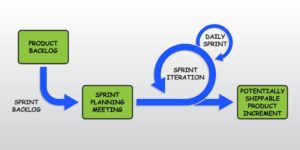
Scrum is a project management methodology that was originally developed for software development, but it also works well for goal setting.

Utilizing scrum is a great way to keep your 90 Day Spring in check and staying on track.

It works like this:

Product Backlog: a list of everything that needs to be done . . . everything!

Sprint Planning: you pull the most important projects that need to be done into your sprint section. These are the things that you plan to do in a short time frame.

Sprint Iteration: these are the short two week projects that you will work on.

Daily Sprint: this is what you will work on today to complete your sprint.

While SCRUM and 90 Day Sprints don’t align perfectly, do you see how you can use SCRUM to accomplish your 90 Day Sprints?

Here is a video on SCRUM to outline it a bit more.

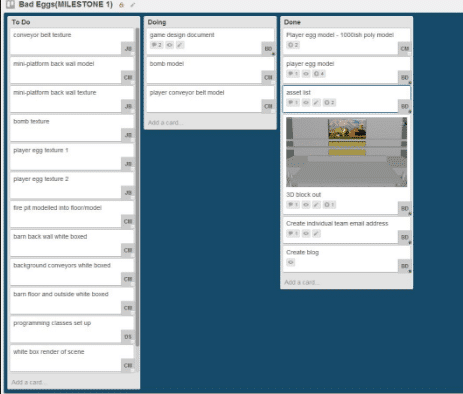
A tool that helps you stay organized on your goals is called Trello. This is a free tool/app that works like a big whiteboard with sticky notes.

Check it out here: https://trello.com/

You essentially can set up any “board” but if you just set up boards called: ToDo, Doing, Done you will be up and running.

To-Do will include all the things that need to be done. Doing is what you are currently working on. Done is everything you have completed.

You can further customize your boards to fit your situation and your goals.
While I realize this module is a bit meta, it is important to take the time required to prepare and understand how to attack a problem before just diving in. Goal setting the right way will make a tremendous impact on your nursing school success.

Unlock the Complete Study System

Used by 300,000+ nursing students. 99.25% NCLEX pass rate.

200% NCLEX Pass Guarantee.
No Contract. Cancel Anytime.

🎉 Special Offer 🎉

Nursing School Doesn't Have To Be So Hard

Go from discouraged and stressed to motivated and passionate

study

Concepts Covered:

  • Test Taking Strategies
  • Note Taking
  • Basics of NCLEX
  • Studying
  • Substance Abuse Disorders
  • Behavior
  • Urinary System
  • Nervous System
  • Peripheral Nervous System Disorders
  • Cardiac Disorders
  • Musculoskeletal Disorders
  • Communication
  • Noninfectious Respiratory Disorder
  • Respiratory System
  • Concepts of Population Health
  • Basics of Human Biology
  • Central Nervous System Disorders – Brain
  • Respiratory Emergencies
  • Perioperative Nursing Roles
  • Concepts of Pharmacology
  • Emergency Care of the Cardiac Patient
  • Factors Influencing Community Health
  • Integumentary Disorders
  • Health & Stress
  • Labor and Delivery
  • Gastrointestinal Disorders
  • Disorders of Pancreas
  • Circulatory System
  • Microbiology
  • Neurological Emergencies
  • Intraoperative Nursing
  • Depressive Disorders
  • Central Nervous System Disorders – Spinal Cord
  • Postpartum Care
  • Prioritization
  • Fundamentals of Emergency Nursing
  • Shock
  • Emergency Care of the Trauma Patient

Study Plan Lessons

01.01 CCRN Test Overview for CCRN Review
12 Points to Answering Pharmacology Questions
5 Rules for Powerpoint
5 Things You Never Knew About The NCLEX – Live Tutoring Archive
9 Easy Steps to Passing Every Nursing School Test | With Jon Haws, BSN, RN, Founder of NURSING.com
Absolute Words
Acute vs Chronic
Addiction – Behavioral Problems Nursing Mnemonic (The 5 D’s)
ADLs (Activity of Daily Living) Nursing Mnemonic (BATTED)
Advanced Critical Thinking
Alcoholism – Outcomes Nursing Mnemonic (BAD)
Alkalosis and Acidosis Nursing Mnemonic (Kick Up, Drop Down)
Anatomy of an NCLEX Question
Anticholinergics – Side Effects Nursing Mnemonic (4 Can’ts)
Arterial Blood Gases Nursing Mnemonic (ROME)
Ask Questions
Assessment for Myasthenic Crisis Nursing Mnemonic (BRISH)
Avoiding Alarm Fatigue
Backwards and Forwards
Bacterial Endocarditis – Symptoms Nursing Mnemonic (Be Joan Of Arc)
Be a Mix Tape (Rewind and Fast-Forward)
Beta 1 and Beta 2 Nursing Mnemonic (1 Heart, 2 Lungs)
Bloom’s Taxonomy
C – Content
Can You Draw It
Canes Nursing Mnemonic (COAL)
Care Plan Review (Addresses Patient Considerations) for Certified Perioperative Nurse (CNOR)
Caring Licensed Practical Nurse Nursing Mnemonic (CLPN)
Caring Practices for Progressive Care Certified Nurse (PCCN)
Causes of Dyspnea Nursing Mnemonic (The 6 P’s)
Causes of Poor Gas Exchange Nursing Mnemonic (All People Can Value Lungs)
Chance’s Story on His Personal Journey
Cheatsheets
CHF Treatment Nursing Mnemonic (UNLOAD FAST)
Child Abuse/Neglect – Warning Signs Nursing Mnemonic (CHILD ABUSE)
CHO, CHO, CHON Nursing Mnemonic (CHO, CHO, CHON)
Cholinergic Crisis – Signs and Symptoms Nursing Mnemonic (SLUDGE)
Clinical Inquiry for Progressive Care Certified Nurse (PCCN)
Common Signs of Parkinson’s Nursing Mnemonic (SMART)
Community Health Tool Nursing Mnemonic (MAP-IT)
Complications of Thoracentesis Nursing Mnemonic (Patients Sometimes Bleed Internally)
Concept Map Course Introduction
Connections
Cor Pulmonale – Signs & Symptoms Nursing Mnemonic (Please Read His Text)
Course Introduction to Nursing School Preparation
Critical Thinking
Critical Thinking
Critical Thinking to Facilitate Patient Care for Certified Perioperative Nurse (CNOR)
Degree Restrictions in Career Growth
Denying Feelings
Dig for the Why
Diploma vs ADN vs BSN vs Bridge
Drawing Pictures
Drug Interactions Nursing Mnemonic (These Drugs Can Interact)
Drugs for Bradycardia & Low Blood Pressure Nursing Mnemonic (IDEA)
Duplicate Facts
E – Engagement
Electrolytes – Location in Body Nursing Mnemonic (PISO)
Emergency Drugs Nursing Mnemonic (LEAN)
Environmental Health Assessment Nursing Mnemonic (I PREPARE)
Evaluating Patient Response to Plan of Care for Certified Perioperative Nurse (CNOR)
Evaluation of Irregular Moles Nursing Mnemonic (ABCDE)
Exercise Guidelines Nursing Mnemonic (FIT)
Explaining the “Why”
Exporting and Uploading to Frame.io
Fetal Distress Interventions Nursing Mnemonic (Stop MOAN)
Fetal Wellbeing Assessment Tests Nursing Mnemonic (ALONE)
Fire Safety 1 Nursing Mnemonic (PASS)
Fire Safety 2 Nursing Mnemonic (RACE)
Formulating Nursing Diagnoses for Certified Perioperative Nurse (CNOR)
Getting Access to frame.io
Getting Started with Tech
Gluten Free Diet Nursing Mnemonic (BROW)
Goal Setting
HESI® Prep Course Introduction
High Risk Behavior Nursing Mnemonic (HEADSS)
How to Write a Nursing Care Plan
Hyperkalemia – Causes Nursing Mnemonic (MACHINE)
Hyperkalemia – Management Nursing Mnemonic (AIRED)
Hyperkalemia – Signs and Symptoms Nursing Mnemonic (Murder)
Hypernatremia – Causes Nursing Mnemonic (MODEL)
Hypoglycemia – Signs and Symptoms Nursing Mnemonic (TIRED)
IADLS (Instrumental Activities of Daily Living) Nursing Mnemonic (SCUM)
Identifying Interventions per Nursing Diagnoses for Certified Perioperative Nurse (CNOR)
Identifying Measurable Patient Outcomes for Certified Perioperative Nurse (CNOR)
Increase MAP Nursing Mnemonic (VAK)
Inflammation- Signs and Symptoms Nursing Mnemonic (HIPER)
Interventions for Aphasia Nursing Mnemonic (PROP)
Interviewing for Nursing School
Introduction to CCMM
Jon’s Story on His Personal Journey
Keep it Short
Lesson Elements
Lidocaine Toxicity – Signs and Symptoms Nursing Mnemonic (SAMS)
Management of Pressure Ulcers (Pressure Injuries) Nursing Mnemonic (SKIN)
MAO Inhibitors Nursing Mnemonic (TIPS)
Marie’s Story on Her Personal Nursing Journey
Medications to Prevent Seizures Nursing Mnemonic (Pretty Little Liars Forever)
Miriam’s Story on Her Personal Journey
Mnemonic for Organ Systems (MR DICE RUNS)
MSN (Masters) vs. DNP (Doctorate)
Multiple Sclerosis Symptoms Nursing Mnemonic (DEMYELINATION)
NCLEX Question Traps! – Live Tutoring Archive
NCLEX® Question Traps
Need Help Making A Study Plan? – Live Tutoring Archive
NRSNG | Closing Thoughts
NRSNG Live | 5 Things You Never Knew About NCLEX Questions
NRSNG Live | AMA (Ask Me Anything) Nursing Success Roundtable
NRSNG Live | AMA Student Panel – How I Survive (Barely) Nursing School
NRSNG Live | How I Went From Nursing School Dropout to Passing NCLEX in 75 and Teaching 18 Million Nurses
NRSNG Live | How to Get the Most out of NRSNG
NRSNG Live | How to Pass Any Nursing School Test
NRSNG Live | My Super Secret Note Taking Method
NRSNG Live | The Core Content Mastery Method and How to Use it Throughout Your Nursing Journey
NRSNG Live | The Successful State of Mind
NRSNG Live | What Your Nursing Professors Want to Tell You But Can’t
Nursing Care Plans Course Introduction
Nursing Case Study Introduction
Nursing Process
Nursing Process – Assess
Nursing Process – Diagnose
Nursing Process – Evaluate
Nursing Process – Implement
Nursing Process – Plan
Nursing School Application Essay
NURSING.com Assessment & Skills Checks
NURSING.com Introduction
O – Origins
OLD CARTS Mnemonic (OLD CARTS)
Online vs Brick-and-Mortar
Opposite or the Same – Live Tutoring Archive
Opposites
Our Goals for Teaching
Our Mission
Outline Question Method (Note taking)
Overview of the Nursing Process
Paying for Nursing School
Personal Growth Resources for Certified Perioperative Nurse (CNOR)
Pharmacokinetics Nursing Mnemonic (ADME)
Pictures
Plan of Care Updates for Certified Perioperative Nurse (CNOR)
Planning Community Health Interventions Nursing Mnemonic (PRECEDE-PROCEED)
Post-Partum Assessment Nursing Mnemonic (BUBBLE)
Prioritization
Prioritizing Assessments
Priority
Purpose of Nursing Care Plans
Questions To Ask Before Applying To A Nursing Program
R – Real-Life
Real Life
Real-Life Experiences
Recording
Repeating Words
Resources for Lesson Creation
RN to MSN
Safety Check Nursing Mnemonic (MADLE)
Same
SATA
SATA like a BOSS – Live Tutoring Archive
SATA like a BOSS 2 – Live Tutoring Archive
SBAR Communication Nursing Mnemonic (SBAR)
Screencastify Setup
Seizure Causes Nursing Mnemonic (VITAMIN)
Seizure Documentation Nursing Mnemonic (TDOC)
Share the Wealth
Shock – Signs and symptoms Nursing Mnemonic (TV SPARC CUBE)
SSRI’s Nursing Mnemonic (Effective For Sadness, Panic, and Compulsions)
Start and End with the Linchpin
Steps in the Nursing Process 1 Nursing Mnemonic (ADPIE)
Steps in the Nursing Process 2 Nursing Mnemonic (AAPIE)
Steps In The Nursing Process 3 Nursing Mnemonic (SOAPIE)
Study Setting
Study Tips for Success
Systems Thinking for Progressive Care Certified Nurse (PCCN)
TEAS® Prep Course Introduction
Tenet 1 Filet Mignon
Tenet 2 Linchpins & Connections
Tenet 3 Why Behind the What
Tenet 4 Learner-Centered Talkabouts
Test Taking Course Introduction
The Academy
The CARPET Methods of Teaching
The Nurse Routine
The Nursing Process Pro Tips for Test Taking – Live Tutoring Archive
The Outline is the Foundation
Thinking Like a Nurse
Time Management
Time Management
To The Point
Tracheal Esophageal Fistula – Sign and Symptoms Nursing Mnemonic (The 3 C’s)
Trauma – Complications Nursing Mnemonic (TRAUMATIC)
Trauma Surgery – Medical History Nursing Mnemonic (AMPLE)
Triage Nursing Mnemonic (START)
Trusting your Gut
Two pathways of the peripheral nervous system Nursing Mnemonic (SAME)
Using Nursing Care Plans in Clinicals
Vasospasm Therapy Nursing Mnemonic (Triple H Therapy)
VEAL CHOP Nursing Mnemonic (Fetal Accelerations and Decelerations) (VEAL CHOP)
Vitamins – Fat Soluble Nursing Mnemonic (All Dogs Eat Kibble)
Vitamins – Water Soluble Nursing Mnemonic (Birth Control)
Walkers Nursing Mnemonic (Wandering Wilma Always Late)
Welcome to NURSING.com
What Are the Absolutes
What are the NCLEX Categories? – Live Tutoring Archive
What do you want me to know?
What is CCMM?
What is Pedagogy
What is the NCLEX?
What Should They Learn
What to Expect In Clinical
Where To Start
Why NURSING.com?
Working night shift
Your Role