Diabetic Ketoacidosis (DKA) Case Study (45 min)

You're watching a preview. 300,000+ students are watching the full lesson.
Master
To Master a topic you must score > 80% on the lesson quiz.
Take Quiz

Included In This Lesson

Study Tools For Diabetic Ketoacidosis (DKA) Case Study (45 min)

DKA Pathochart (Cheatsheet)
DKA vs HHNS (Cheatsheet)
Treatment for DKA and HHNS (Image)
DKA Treatment (Mnemonic)
NURSING.com students have a 99.25% NCLEX pass rate.

Outline

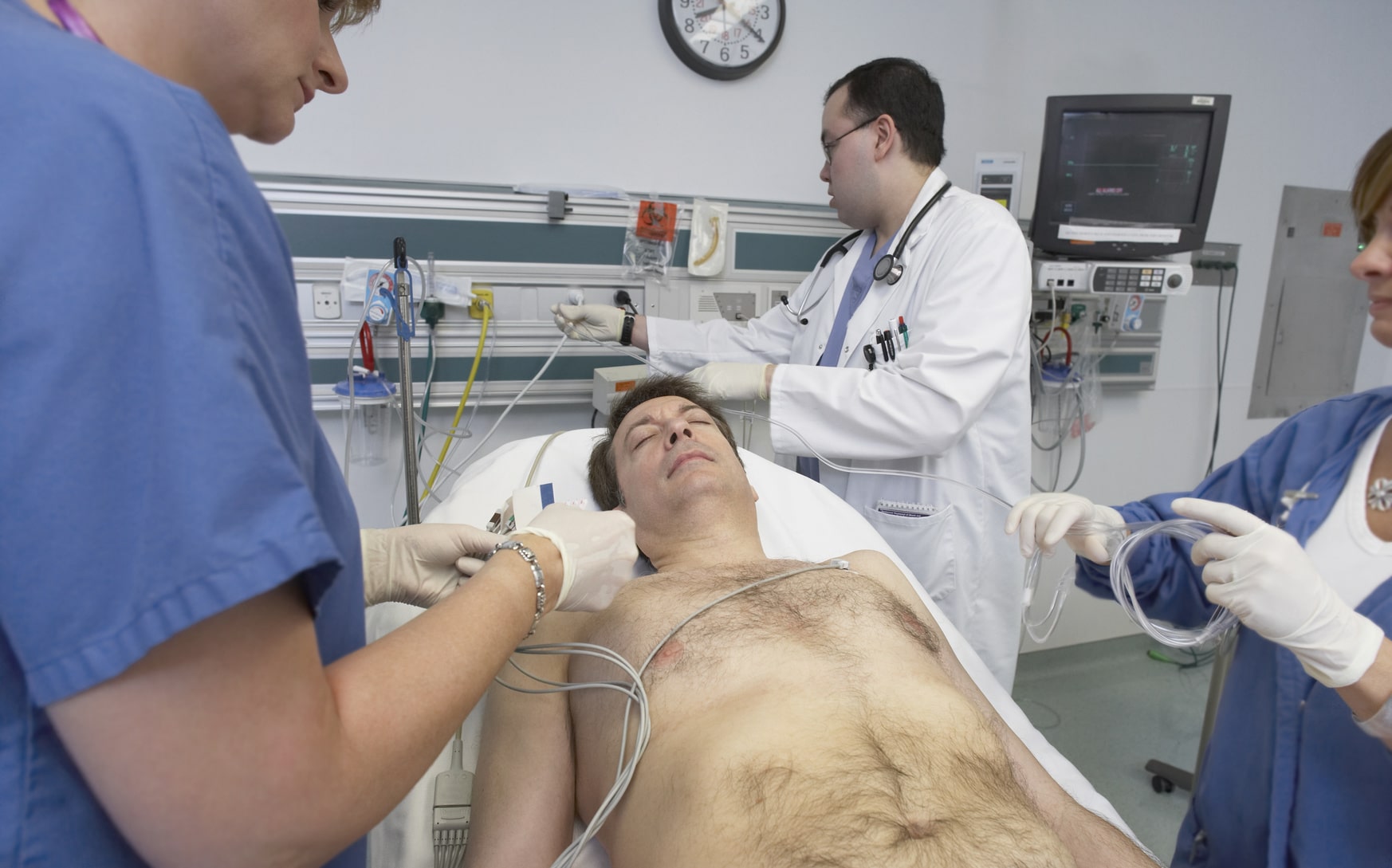
Mr. Logan is a 32-year-old male with a history of DM Type I. He presented to the Emergency Department (ED) after being found by his family with decreased LOC, rapid heavy breathing, and fruity breath. His family reports flu-like symptoms for the last few days.


male diabetes mellitus (DM) patient for use in Case Study


Critical Thinking Check
Bloom's Taxonomy: Analysis

Before even gathering further information - what do you think is going on? Why?

VIEW ANSWER

Critical Thinking Check
Bloom's Taxonomy: Analysis

What diagnostic or lab tests would you expect the provider to order?

VIEW ANSWER


The nurse draws a Complete Metabolic Panel and notifies the Respiratory Therapist to obtain an Arterial Blood Gas. Upon further assessment, the patient is oriented x 2 and drowsy. He is breathing heavily. Lungs are clear to auscultation, S1/S2 present, bowel sounds active, pulses present and palpable x 4 extremities. A POC glucose reads >450 (meter max).

Vital signs are as follows:

HR 87
RR 32
BP 123/77
SpO2 96%

Mr. Logan’s labs result and show the following:

Glucose
804 mg/dL
K 6.1 mEq/L
BUN 39 mg/dL
pH 7.12
Cr 1.9  mg/dL
pCO2 30
Anion Gap 29 mEq/L
HCO3– 17
Urine = Positive for Ketones

Critical Thinking Check
Bloom's Taxonomy: Analysis

Using these lab results, explain what is going on physiologically with Mr. Logan.

VIEW ANSWER

Critical Thinking Check
Bloom's Taxonomy: Analysis

What is the #1 priority for Mr. Logan at this time?

VIEW ANSWER

The provider writes an order for an Insulin Lispro infusion IV, titrating to decrease blood glucose per protocol, 1L NS bolus NOW, and a continuous infusion of Normal Saline IV at 250 mL/hr, and to change the fluids to D5 ½ NS at 125 mL/hr once the blood glucose level falls below 250 mg/dL.


Critical Thinking Check
Bloom's Taxonomy: Analysis

What is the first action you should take after receiving these orders?

VIEW ANSWER

The provider adjusts the order to Regular Insulin IV infusion.  Orders are also written for hourly POC glucose checks and a q2h BMP.


Critical Thinking Check
Bloom's Taxonomy: Analysis

Why is it important to check a BMP frequently? What are we monitoring for?

VIEW ANSWER

After 4 hours and another 1L bolus of NS, Mr. Logan’s blood glucose level has dropped to 174 mg/dL, but his anion gap is still 19. The nurse changes his fluids to D5 ½ NS per the order and continues the insulin infusion. The most recent BMP showed a K of 3.7, down from 6.1, so the provider orders to give 40 mEq of KCl PO.

Critical Thinking Check
Bloom's Taxonomy: Analysis

Why is the insulin continued even after the blood glucose decreases?

VIEW ANSWER

After another 4 hours, Mr. Logan’s anion gap is now 12, a repeat ABG shows a pH of 7.36 with normal CO2 and HCO3– levels.  The nurse begins to transition Mr. Logan off of the IV infusion to SubQ insulin per protocol.  He is feeling much better and says he’s embarrassed that he had to be brought to the hospital.  


Critical Thinking Check
Bloom's Taxonomy: Application

What education can you provide Mr. Logan to help him understand why this happened and how to prevent it from recurring in the future?

VIEW ANSWER
Unlock the Complete Study System
Used by 300,000+ nursing students. 99.25% NCLEX pass rate.
  • ✓Full lesson outlines
  • ✓NCLEX simulator (SIMCLEX)
  • ✓6,500+ practice questions
  • ✓2,000+ lesson videos
  • ✓300+ cheatsheets

200% NCLEX Pass Guarantee.
No Contract. Cancel Anytime.

🎉 Special Offer 🎉

Nursing School Doesn't Have To Be So Hard

Go from discouraged and stressed to motivated and passionate

DRN 201, Week 9

Concepts Covered:

  • Disorders of Pancreas
  • Endocrine
  • Renal
  • Newborn Care
  • Renal Disorders
  • Pregnancy Risks
  • Medication Administration
  • Respiratory Disorders
  • Female Reproductive Disorders
  • Male Reproductive Disorders
  • Integumentary Disorders
  • Musculoskeletal Trauma
  • Urinary System
  • Immunological Disorders
  • Acute & Chronic Renal Disorders
  • Emergency Care of the Neurological Patient

Study Plan Lessons

03.04 DKA vs HHNK for CCRN Review
09.05 Chronic Renal Failure for CCRN Review
Antidiabetic Agents
Blood Glucose Monitoring
Creatinine Clearance Lab Values
Diabetes Management
Diabetes Mellitus (DM) Module Intro
Diabetes Mellitus & Those Dang Blood Sugars! – Live Tutoring Archive
Diabetes Mellitus Case Study (45 min)
Diabetes Mellitus Type 1- Signs & Symptoms Nursing Mnemonic (The 3 P’s)
Diabetic Emergencies for Certified Emergency Nursing (CEN)
Diabetic Ketoacidosis (DKA) Case Study (45 min)

Gestational Diabetes (GDM)
Gestational Diabetes and Why YOU Should Know About It – Live Tutoring Archive
Glipizide (Glucotrol) Nursing Considerations
Glucose Lab Values
Glucose Tolerance Test (GTT) Lab Values
Hemoglobin A1c (HbA1C)
Insulin
Insulin – Intermediate Acting (NPH) Nursing Considerations
Insulin – Long Acting (Lantus) Nursing Considerations
Insulin – Mixtures (70/30)
Insulin – Rapid Acting (Novolog, Humalog) Nursing Considerations
Insulin – Short Acting (Regular) Nursing Considerations
Metformin (Glucophage) Nursing Considerations
Nursing Care and Pathophysiology of Diabetes Mellitus (DM)
Nursing Care and Pathophysiology of Diabetic Ketoacidosis (DKA)
Nursing Case Study for Type 1 Diabetes
Anti-Infective – Sulfonamides
Wounds (Infectious, Surgical, Trauma) for Progressive Care Certified Nurse (PCCN)
Insulin Mnemonic (Ready, Set, Inject, Love)
Amputation
Nursing Case Study for Diabetic Foot Ulcer
Nursing Care Plan (NCP) for Hyperosmolar Hyperglycemic Nonketotic Syndrome (HHNS)
Sodium and Potassium Imbalance for Certified Emergency Nursing (CEN)
Gabapentin (Neurontin) Nursing Considerations
Nursing Care and Pathophysiology of Chronic Kidney (Renal) Disease (CKD)
03.03 Hypoglycemia for CCRN Review
Acute Confusion
Corticosteroids
Glucagon Lab Values
Glucagon (GlucaGen) Nursing Considerations
Hyperglycemia for Progressive Care Certified Nurse (PCCN)
Hypoglycemia Management Nursing Mnemonic (Cool and Clammy – Give ‘Em Candy)